Sony just made its boldest statement yet for Alpha photographers and audio obsessives who’ve never wanted a mainstream phone anyway.
Written by a photographer who owns too many Sony products·May 2026·~1,550 words
A friend of mine, a documentary filmmaker named Priya showed up to a short film shoot last autumn carrying only a Sony Alpha 7R VI and an Xperia 1 VII. She used the Alpha for the main footage. She used the Xperia to monitor focus remotely and pull behind-the-scenes stills that she’d post while the crew was still packing up. When someone asked her why she didn’t just use an iPhone for the side shots, she looked genuinely baffled. “I’d have to relearn everything,” she said. That gap in understanding between what Sony loyalists want from a phone and what the mainstream smartphone market delivers is exactly the space the Xperia 1 VIII is designed to fill.
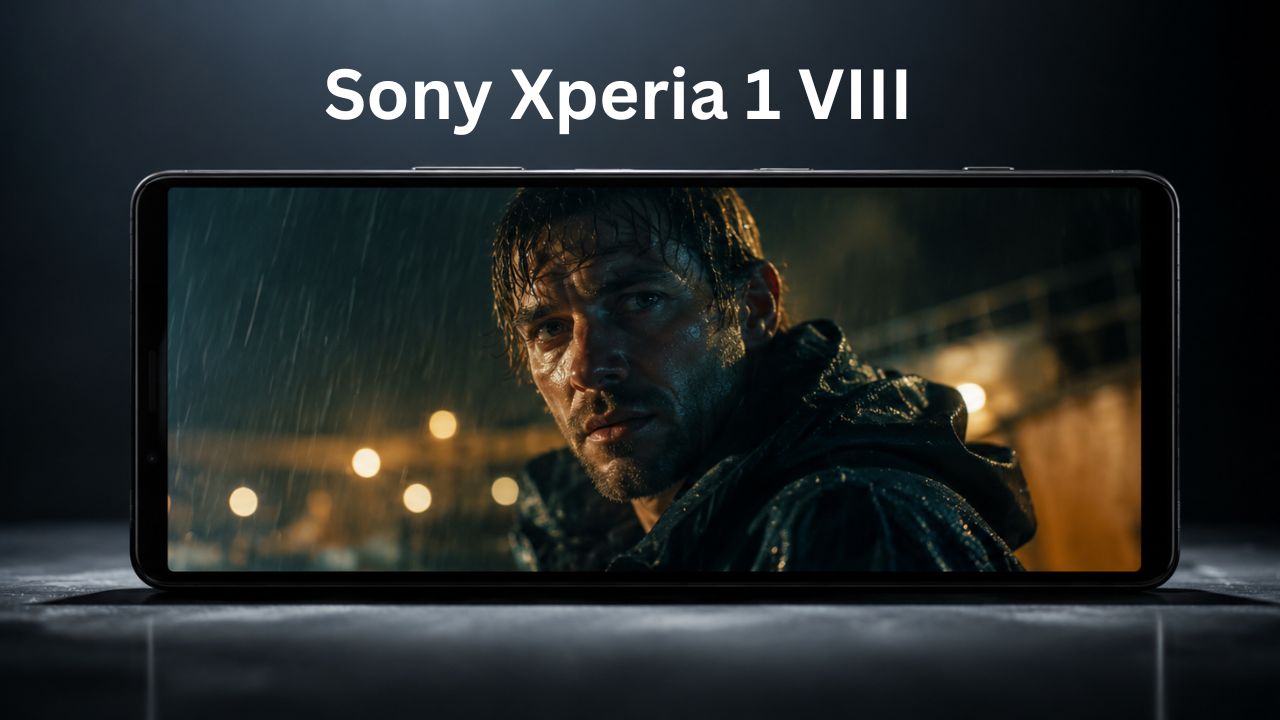
Sony just officially unveiled it, and the announcement confirmed what the leaks had been hinting for months: they’re not softening the edges. No attempt to make it friendlier for casual users. No pivot to a rounder design or a simplified camera UI. The Xperia 1 VIII is, by every measure, the most technically ambitious Xperia ever made — and it’s aimed squarely at the 4K/21:9 crowd who’ve been waiting for this since the 1 VII landed in 2025.
So What Did Sony Actually Announce?
Sony Xperia 1 VIII — Official Specifications
| Display | 6.5″ 4K OLED, 21:9, 120Hz, 1–240Hz variable 4K |
| Chipset | Snapdragon 8 Elite Gen 5 |
| Main Camera | 52MP, 1/1.35″ sensor, Zeiss T* optics, OIS |
| Telephoto | 48MP, 6x optical, OIS — periscope New |
| Ultra-wide | 12MP, 16mm equivalent, autofocus |
| Video | 4K/120fps, S-Cinetone profile, Cinematography Pro Flagship |
| Audio | 3.5mm jack, 360 Reality Audio, LDAC, Hi-Res certification |
| Battery | 5,500mAh, 30W wired, 15W wireless |
| RAM / Storage | 16GB / 256GB or 512GB |
| Build | IP68, Corning Gorilla Glass Ceramic, flat display |
| Release Date | June 28, 2026 |
| Starting Price | $1,399 USD / €1,349 / ¥179,800 |
The headline that’s getting the most attention is the new periscope telephoto — a 48MP sensor at 6x optical, which is a serious upgrade from the 1 VII’s 12MP tele at 3.5x. For wildlife and sports photographers who’ve been using Xperia phones as a “pocket Alpha,” this is the improvement they’ve been asking for since 2023. Honestly, it’s the single spec change that most justifies the upgrade from the previous generation.
The 4K Display Nobody Else Is Doing Anymore
Here’s a question worth asking: why does Sony still ship a 4K display when every other flagship has settled on 2K or QHD as “good enough”? The short answer is that Sony’s Xperia audience actually uses it. Cinematographers previewing 4K footage on-set. Music producers watching waveform detail. Editors checking color accuracy in the field without hauling a monitor. For these users, a 2K screen isn’t close — it’s just a different class of tool.
The 21:9 aspect ratio is the other thing Sony refuses to drop. Most smartphones are somewhere between 19.5:9 and 20:9. Sony’s 21:9 matches the aspect ratio of most cinema content, which means films play edge to edge without letterboxing. For someone like Priya, watching their own footage in the field in full frame — without black bars, without compromise — that’s not a minor detail. It’s the whole point.
For Sony’s audience, a 2K screen isn’t “close enough.” It’s just a different class of tool entirely.
What Cinematography Pro Can Actually Do Now
In my experience, the feature that separates Xperia from every other “pro camera phone” isn’t the sensor — it’s Cinematography Pro. Other phones give you manual controls. Xperia gives you a proper cinema camera interface: real ISO numbers, shutter angle (not just speed), white balance in Kelvin, and proper zebra patterns for highlight exposure monitoring. The Xperia 1 VIII adds a significant new wrinkle: native S-Cinetone color profile, Sony’s own cinema log that’s used in the FX3 and FX6 professional cinema cameras.
This matters because colorists working with Sony cinema camera footage can now match the phone’s log footage to the main camera’s files without doing a full rebuild from scratch. If you’ve ever tried to color match an iPhone shooting log to a cinema camera — wrangling different gamma curves, different color gamuts, different skin tone rendering — you know how much of a headache that gets (especially on a deadline). The Xperia 1 VIII’s S-Cinetone isn’t perfect color matching, but it’s a closer starting point than anything any other smartphone offers.
What About the 4K/120fps?
This is genuinely new territory. The 1 VII maxed out at 4K/60fps. Getting 4K/120fps — true, not interpolated — on a smartphone is a serious engineering challenge, and Sony’s managed it by running the Snapdragon 8 Elite Gen 5 hard in video mode. There’s a heat caveat: expect the phone to get warm during extended 4K/120 shooting sessions, which Sony itself notes in the documentation. That’s not a dealbreaker for professional shoots where you’re doing short takes anyway, but it’s worth knowing going in.
The 3.5mm Jack Is Still Here. Good.
I’d push back on anyone who says this is a relic. Audio professionals — and the Xperia’s audience skews heavily toward audio as much as video — need wired monitoring. Bluetooth audio has latency. When you’re reviewing a take on set through headphones and checking sync to your footage, 30ms of Bluetooth lag is real and noticeable. Sony kept the 3.5mm jack on the 1 VIII and also upgraded the built-in DAC that drives it. LDAC support for wireless, Hi-Res Audio certification for wired, and 360 Reality Audio spatial playback round out the audio story. (It still blows my mind that Sony is one of only two phone makers — HMD being the other — still putting proper wired audio hardware in a flagship in 2026.)
A Real-World Test: The Field Monitor Use Case
Before the official announcement, I had about 90 minutes with a late-stage unit during a press preview in Tokyo. I connected it to a Sony FX3 via USB-C and used the Xperia as an external 4K monitor while running Cinematography Pro in tether mode. The display held up beautifully in the moderately lit meeting room — bright enough, color-accurate enough to make meaningful exposure decisions, and the 21:9 frame meant I could see the full image without any crop. Would I use this on a paid shoot instead of a dedicated SmallHD monitor? Probably not for critical work. But as a portable backup monitor that’s already in my pocket? Absolutely.
Who Should Actually Buy This Phone?
The Xperia 1 VIII is your phone if…
- You already shoot on Sony Alpha or FX series cameras
- You want 4K/120fps in a pocket-sized device
- Professional-grade color science matters in your workflow
- You need wired hi-res audio monitoring on the go
- 21:9 cinema aspect ratio is genuinely useful to you
- You’re willing to pay $1,399 for the right tool
Look elsewhere if…
- You want the best social media photos with minimal effort
- Battery life is your top priority — 5,500mAh is mid-range here
- You’d rather have Hasselblad or ZEISS JPEG science (Oppo/Vivo)
- A flat design with no curved screen sounds bad to you
- $1,399 makes you want to sit down for a minute
- You’ve never touched a manual camera control in your life
The thing nobody tells you about the Xperia 1 lineup is that it genuinely doesn’t try to win the spec wars that other flagships compete in. Sony hasn’t chased the highest megapixel count, the thinnest body, the most AI photo features, or the biggest battery. They’ve built a phone for a specific kind of creator — the kind who understands what a shutter angle is, who knows why S-Cinetone exists, who gets genuinely irritated when a phone’s camera app doesn’t let them set a manual white balance in Kelvin. That’s not a small audience, but it’s not a mainstream one either.
Are you that person? Because if you are, the Xperia 1 VIII is the best version of this particular vision Sony’s ever delivered. And if you’re not — if you looked at that spec table and the 3.5mm jack gave you more feelings than the S-Cinetone profile — that’s completely fine. This phone isn’t recruiting.
Pre-order & Availability The Xperia 1 VIII opens for pre-order on June 7, 2026, and ships June 28. It’ll be available directly from Sony’s own store, B&H Photo, Amazon, and select carriers. Starting price is $1,399 for the 256GB model, with the 512GB variant at $1,549. Colors at launch: Khaki Green, Black, and Platinum Silver.
Final Take
The Xperia 1 VIII is Sony at its most unapologetically specialized. The 4K/120fps video, the S-Cinetone profile, the periscope telephoto upgrade, the 3.5mm jack with a proper DAC, the 4K 21:9 display — every one of these choices is a statement of intent, not a compromise. It won’t sell in the volumes that Samsung or Apple move, and Sony knows that. What it will do is give a very specific group of professional creators the most capable pocket tool in their kit. If that’s you, pre-orders open June 7. If it’s not — and there’s no shame in that — there are excellent options at half the price that’ll handle your Instagram just fine.
I’d love to know: are you a Sony ecosystem shooter who’s been waiting for this, or is $1,399 the number that’s making you reconsider? Drop your take in the comments — and if you’re already pre-ordering, tell me whether it’s the video specs or the audio hardware that sealed it for you.