My cousin called me at 11 PM last December in a full panic. She’d cracked her Samsung Galaxy screen two days before her wedding, couldn’t get it fixed in time, and was asking if she should just “switch to iPhone” right then and there. I told her absolutely not. Not because iPhones are bad. But because you don’t switch ecosystems 48 hours before the most photographed day of your life. She got the screen fixed. The photos turned out great. But that conversation stuck with me, because it made me realize how much emotion people pour into this debate. Sometimes way more than the actual differences warrant.
So let’s actually talk about it. Not the spec-sheet version. The real version.
The Ecosystem Trap (And Why It Matters More Than the Phone)
Here’s the thing nobody tells you upfront: you’re not really choosing a phone. You’re choosing a world to live in.
If you’ve been on iPhone since 2015, your photos are in iCloud, your friends text you in iMessage blue bubbles, your Apple Watch talks to your iPhone, your AirPods switch between your Mac and your phone automatically. And switching to Android isn’t just buying a new device. It’s packing up your apartment and moving cities. The furniture doesn’t come with you.
Same goes the other way. If your whole family is on Google Photos, you use a Chromebook for work, and you’ve got a Pixel watch on your wrist, jumping to iPhone means spending the first three months re-learning where everything lives and mourning features you didn’t know you’d miss.
Honestly, I’ve done both migrations and neither one is fun. I moved from Android to iPhone in 2019 and it took me about six weeks before I stopped accidentally reaching for a back button that wasn’t there.
What iPhone Actually Does Better
Let’s not be wishy-washy about this. There are things Apple genuinely do best than android.
Software support. This is the big one. Apple released iOS 17 in 2023 and pushed it all the way to the iPhone XS, a phone from 2018. That’s five years of updates. Most Android phones, even flagship ones from Samsung or Google, get three to four years of OS updates if you’re lucky. Budget Android phones? Sometimes just one or two. If you’re spending $1,000+ on a phone, that longevity gap matters.
The camera consistency. iPhones don’t always have the “best” camera by raw spec, the Pixel 9 Pro shot slightly sharper landscapes in testing I did last spring. But the iPhone is consistent. Point it at anything, in any light, and the result looks good. It rarely surprises you badly. Android flagships can produce stunning images, but they can also occasionally produce something weird and over-processed that looks like a painting. (The Samsung “zoom enhance” controversy from 2023 was a whole thing.)
App polish. This one’s subjective but real. Many developers still build for iOS first, which means apps often feel more refined before they hit Android. Instagram, for instance, launched its grid update on iOS a full two months before Android in 2023. Not a dealbreaker for most people but if you care about having the latest version of things, iPhone usually wins.
What Android Does Better (And Some of It Isn’t Close)
Have you ever wanted to set a different browser as your default on iPhone? You can now, since iOS 14 in 2020. Before that? Stuck with Safari, no matter what. Android has had that since day one. That’s just one example of a broader truth: Android is genuinely more flexible.
You can sideload apps. You can change your default apps. You can plug your phone into a computer and drag files onto it like it’s a USB drive, no iTunes, no workarounds, nothing. You can put a widget wherever you want on your home screen. You can use a file manager that actually shows you where your stuff is.
I’d push back on the idea that this only matters to “tech people.” My dad of 67 years old, retired, not particularly tech-savvy, switched from iPhone to a Pixel 7a in 2022 because he wanted to use a Bluetooth hearing aid that had better Android support. He figured it out fine. Flexibility matters to regular people too, in specific, practical ways.
Price range. This is where Android absolutely wins and it’s not even a debate. You can get a genuinely good Android experience for $350. The Google Pixel 7a retailed at $499 and punched well above its weight on camera performance. The cheapest new iPhone right now sits around $699, and the experience below that is an older model with compromises. If budget is real and for a lot of people it is , Android is the honest answer.
The Camera Showdown (Because Everyone Always Asks)
Both platforms have great cameras. That sentence will make some people angry, but it’s true.
The Pixel 9 Pro has genuinely mind-bending computational photography, Night Sight at this point is almost unfair in low light. The iPhone 15 Pro’s camera system is excellent in video, especially with the Log format for anyone who edits footage. Samsung’s Galaxy S24 Ultra has a 200MP sensor and zoom capabilities that make it feel like a completely different category of device.
Here’s my honest take: for 90% of people taking photos of their kids, their food, their vacations, and their dogs — the camera difference between a flagship iPhone and a flagship Android is not something you’d notice without doing a side-by-side comparison with both photos on a 27-inch monitor. You just wouldn’t. Both are extraordinary. Pick based on everything else.
Who Should Actually Get What
Get an iPhone if:
- You already own an Apple Watch, AirPods, or a Mac — the integration genuinely adds value
- You want a phone that’ll get software updates through 2028 and beyond
- You’re buying for a teenager who’ll be sharing photos with other iPhone-using friends (green bubbles are still a social thing in the U.S., unfortunately)
- You value a consistent, predictable experience over tinkering
- You want to use your phone as full time camera working in a media house. It never lose video quality
Get an Android if:
- Your budget is under $600 and you don’t want to compromise on performance
- You want to actually own your phone’s file system
- You’re in the Google ecosystem — Gmail power user, Google Drive for everything, Chromecast on your TV
- You like having options: a foldable like the Galaxy Z Fold 6, a compact phone, a phone with a stylus, a phone with a giant battery… Android covers all of it
The one situation where I’d say it genuinely doesn’t matter: you’re a normal person who mostly uses your phone to text, scroll social media, and take photos. Buy whichever you can afford, learn it, and stop reading comparison articles including this one.
The Price Breakdown (Because Nobody Actually Talks Numbers)
Here’s roughly what you’re looking at in 2024:
- iPhone 17: $799
- iPhone 17 Pro: $999
- Google Pixel 10a: $499
- Google Pixel 10 Pro: $999
- Samsung Galaxy S26: $799
- Samsung Galaxy S26 Ultra: $1,299
So at the flagship tier, iPhone and Android are roughly equivalent in price. The difference is Android has a legitimate mid-range ecosystem. Apple just doesn’t compete there with new hardware.
The Real Talk at the End
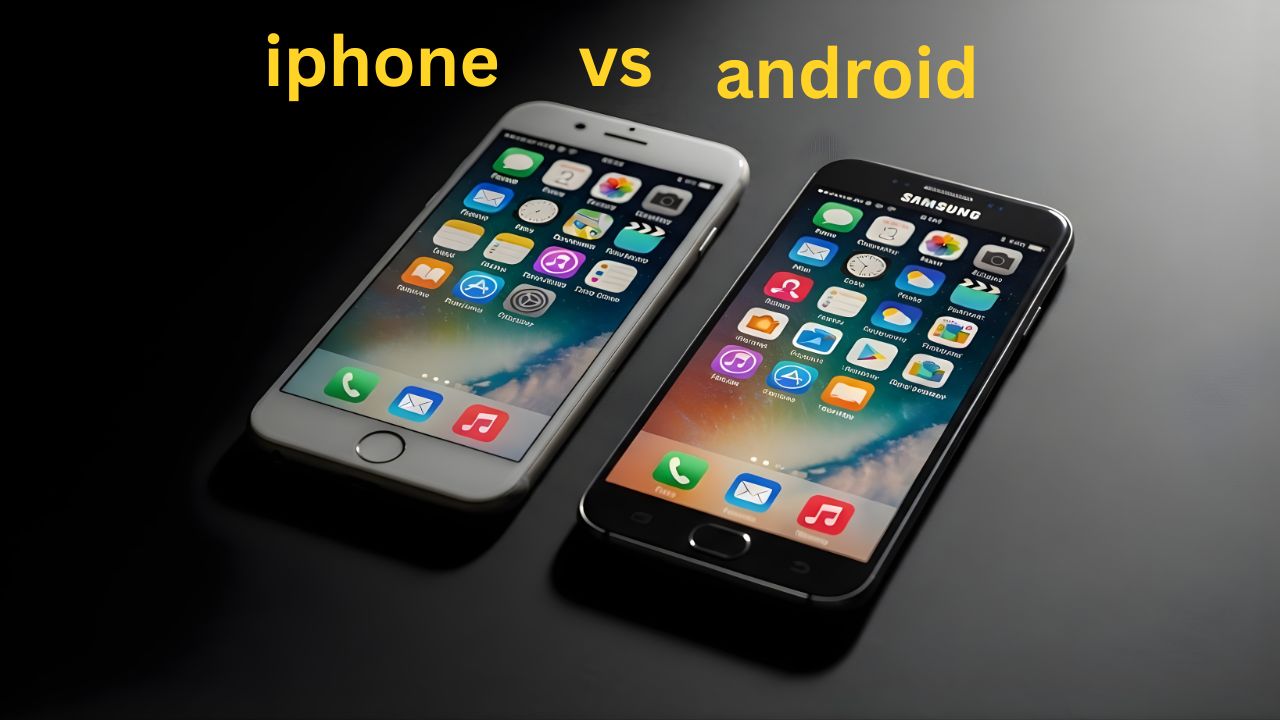
Look, the iPhone vs. Android debate has been going on since 2008 and it’s still going because neither side is wrong. They’re genuinely different tools with different philosophies. Apple’s “it just works” control versus Android’s “you figure it out” freedom. Both philosophies have real value depending on who you are.
What I’d actually tell my cousin, or you, or anyone asking me this at a party: figure out which apps and services you can’t live without, figure out whether your close circle is iPhone or Android (it matters more than you think socially, at least in the U.S.), and pick accordingly. Don’t let a YouTube review tell you the Pixel is “objectively better” or that iPhone is “worth every penny” without knowing your actual life.
So, what’s your situation? Are you deep in the Apple ecosystem and just frustrated, or are you looking at Android for the first time? Drop it in the comments. I’m genuinely curious what’s making you consider the switch, because the answer almost always changes my recommendation.