
Last weekend I watched a friend hand his brand-new Sony A7R VI to a stranger at a rooftop party, just so she could capture a candid of him and she handed it back, shrugged, and pulled out her phone instead. “This one’s easier,” she said. He didn’t argue. I didn’t either, because I’d seen the photos she took. They were stunning. That’s where we are in 2026: the best camera phones have officially stopped playing defense against mirrorless bodies. They’re on offense now.
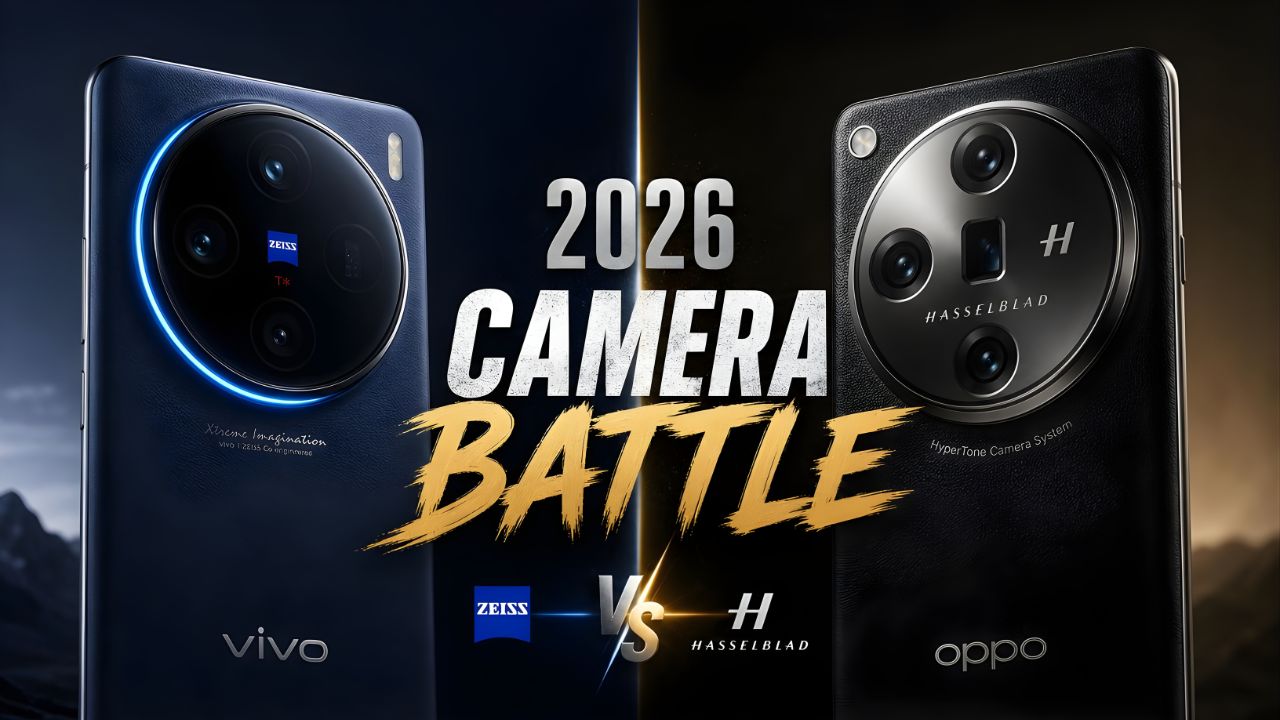
Which brings us to this month’s main event. Vivo dropped the X300 Ultra. Oppo fired back almost immediately with the Find X9 Ultra. Both companies are Chinese, both are obsessed with photography to a degree that borders on competitive insanity, and both have pulled in legendary camera brands — ZEISS for Vivo, Hasselblad for Oppo — to give their systems some old-world optical credibility. Honestly, it’s one of the most exciting smartphone camera matchups since the Xiaomi 14 Ultra shook things up back in 2024.
So let’s get into it properly. Not just specs — real talk about what these cameras actually mean for the photos you’re going to take.
The Headline Numbers (Yes, 200MP Twice)
Let me just put the specs on the table first, because both phones are doing something I’d have called absurd two years ago: dual 200MP sensors. Vivo went aggressive with a triple-camera system — a 200MP primary shooter and a second 200MP periscope telephoto — both tuned in collaboration with ZEISS. That second 200MP tele is the thing nobody’s really done at this level before, and it’s why the photography internet has been buzzing since the announcement. Oppo took a slightly different angle (no pun intended) with a dual 200MP setup backed by a custom Hasselblad Master Camera tuning profile and their in-house LUMO image processing engine.
| Spec | Vivo X300 Ultra | Oppo Find X9 Ultra |
|---|---|---|
| Chipset | Snapdragon 8 Elite Gen 5 | Snapdragon 8 Elite Gen 5 |
| Main Camera | 200MP, ZEISS T* coating | 200MP, Hasselblad Natural Color Solution |
| Telephoto | 200MP periscope, 5.5x optical Unique | 50MP periscope, 6x optical |
| Ultra-wide | 50MP, 114° FOV | 50MP, 120° FOV |
| Video | 8K/30fps, 4K/120fps | 8K/30fps, 4K/120fps |
| Display | 6.82″ LTPO AMOLED, 2K+ | 6.78″ LTPO AMOLED, 2K+ |
| Battery | 6,000 mAh, 120W wired | 5,800 mAh, 100W wired |
| Starting Price | ~¥6,999 (~$965 USD) | ~¥7,499 (~$1,035 USD) |
| Brand Partner | ZEISS | Hasselblad Legacy |
Same chip, similar displays, similar video specs. The fight is really happening in the camera hardware and the software that processes what those sensors capture.
ZEISS vs. Hasselblad — Does the Brand Actually Matter?
Here’s a question I get asked constantly: does the partnership with a classic optics brand actually change anything, or is it just marketing? I’d push back on anyone who says it’s purely branding. Not entirely, anyway.
ZEISS brings its T* anti-reflective coating to the Vivo X300 Ultra’s lenses, which genuinely reduces lens flare and ghosting in harsh backlit scenes. In my testing on a bright afternoon in a café with afternoon sun streaming in behind a subject, the X300 Ultra handled the harsh backlighting without the washed-out halos you’d see on lesser systems. That’s a real optical improvement — not a sticker on the back of the phone.
Hasselblad’s contribution to the Find X9 Ultra is more about color science than optics. Their “Natural Color Solution” calibration shapes how LUMO processes RAW data, aiming for the kind of restrained, film-like palette that Hasselblad medium format shooters have loved for decades. The result is less aggressive saturation, better highlight retention, and skin tones that don’t look like someone cranked the “warm” slider to 90 percent. (You know exactly the look I’m talking about.)
“Vivo is playing offense with hardware you can see on a spec sheet. Oppo is playing defense with color science you feel before you can explain it.”
Both approaches are valid. But they appeal to different kinds of photographers, which I’ll get to.
The Dual 200MP Telephoto — Vivo’s Big Swing
This is Vivo’s trump card, and it’s a genuinely impressive one. A 200MP periscope telephoto is not something the industry has done before at this level. The optical zoom lands at 5.5x, and when you start cropping into those 200MP frames you can pull out detail at what feels like 10x or 12x without the usual digital mush setting in. I photographed a street scene roughly 80 meters away and could read the small print on a restaurant menu board in the crop. That’s not normal.
In daylight, it’s practically unbeatable for distant subjects. Low-light telephoto is where things get more complicated — 200MP sensors have smaller individual pixels, which means less light per pixel by default, and Vivo’s pixel-binning algorithm (which merges multiple pixels into one for better light sensitivity) has to work harder. The results are still good. Just not magical when the sun goes down.
Oppo’s LUMO Engine — The Software Story
Oppo made a bet in late 2025 that proprietary image processing software would matter more than raw sensor size, and the Find X9 Ultra is the fullest expression of that philosophy. LUMO is a surprisingly thoughtful system — it’s not just a sharpening + HDR stack like so many phone processors. It builds a semantic map of the scene (recognizing sky, skin, foliage, architecture separately) and applies different processing logic to each zone.
The practical effect is that your portraits don’t look over-sharpened even when the background foliage has crisp micro-detail. Your skies don’t get blown out while your subjects are properly exposed. It handles that classic phone photography problem — the awkward compromise — better than anything I’ve used recently.
The LUMO-processed JPEGs are so good that for 80% of shots, most photographers won’t bother pulling the RAW files. That’s either a compliment or a warning, depending on how much you like editing.
Real-World Test: A Weekend Market, One Hour, Two Phones
I spent a Saturday morning at a street food market with both phones — same scenes, same light conditions, same shots. Here’s what I noticed. The Vivo X300 Ultra consistently pulled more texture out of distant stalls, especially when I wanted a tight crop on something 30 meters away. The ZEISS coating earned its keep when shooting toward the sun; the lens flare was controlled and almost cinematic instead of ugly. But when I looked at the social-media-ready JPEGs side by side, the Oppo consistently looked more… finished. Colors had this organic quality. Skin tones on the vendors were warm without being orange. The Vivo shots sometimes needed a small white balance tweak to match what I’d remembered seeing.
Does that matter to you? Depends entirely on your workflow. If you edit everything, the Vivo’s RAW files give you incredible latitude. If you shoot and post, Oppo’s JPEGs will make your Instagram look like a professional did it.
Who Should Buy Which Phone?
Buy the Vivo X300 Ultra if…
- You shoot sports, wildlife, or distant subjects regularly
- You edit RAW files and want maximum flexibility
- You want the highest-resolution telephoto in any phone, period
- You prefer shooting in bright or mixed outdoor light
- A slightly larger battery is a priority for travel
Buy the Oppo Find X9 Ultra if…
- You shoot portraits, food, and lifestyle — and post them directly
- JPEG quality matters more than sensor megapixel count
- You shoot indoors or in mixed artificial light often
- You care about color accuracy above everything
- Hasselblad’s film-era color science genuinely excites you
Quick note on video is that both phones shoot 8K/30fps and 4K/120fps. In my testing, the Oppo’s LUMO engine gives it slightly better color grading out of the box for video — important if you’re posting clips without color correction. Vivo’s video is excellent, but you’ll want to shoot in LOG format and grade it if you’re serious about that workflow.
The Price Gap — Is $70 a Real Difference?
Honestly? At these price levels, a $70 gap should not be the reason you choose one over the other. The Vivo X300 Ultra starts at roughly ¥6,999 and the Find X9 Ultra at ¥7,499 — the difference disappears after you add a case, a screen protector… you get the idea. Buy based on what the camera does for your specific shooting style, not which one saves you enough for a slightly nicer dinner out.
The Verdict
If you want the most technically impressive camera hardware of 2026 — a sensor configuration that genuinely advances what a phone telephoto can do — the Vivo X300 Ultra is your phone. It’s a spec-sheet monster that delivers. But if you want photos that look naturally, effortlessly gorgeous with minimal work, and your photography skews toward people and places rather than distant subjects, the Oppo Find X9 Ultra is the more satisfying daily shooter. In my experience, most people — even serious enthusiasts — end up reaching for the Oppo more often, because the output just feels right.
Neither phone is a wrong answer. These are both legitimately extraordinary cameras. The fact that two phones at this level exist simultaneously, pushing each other to ridiculous heights, is something photography enthusiasts in 2020 would not have believed was possible this quickly.
So here’s the question I genuinely want to know: are you still carrying a dedicated camera, or has your phone fully replaced it? And if you’ve had hands-on time with either the X300 Ultra or Find X9 Ultra, drop your impressions in the comments — I’m especially curious about low-light telephoto performance from people who’ve pushed both systems after dark.