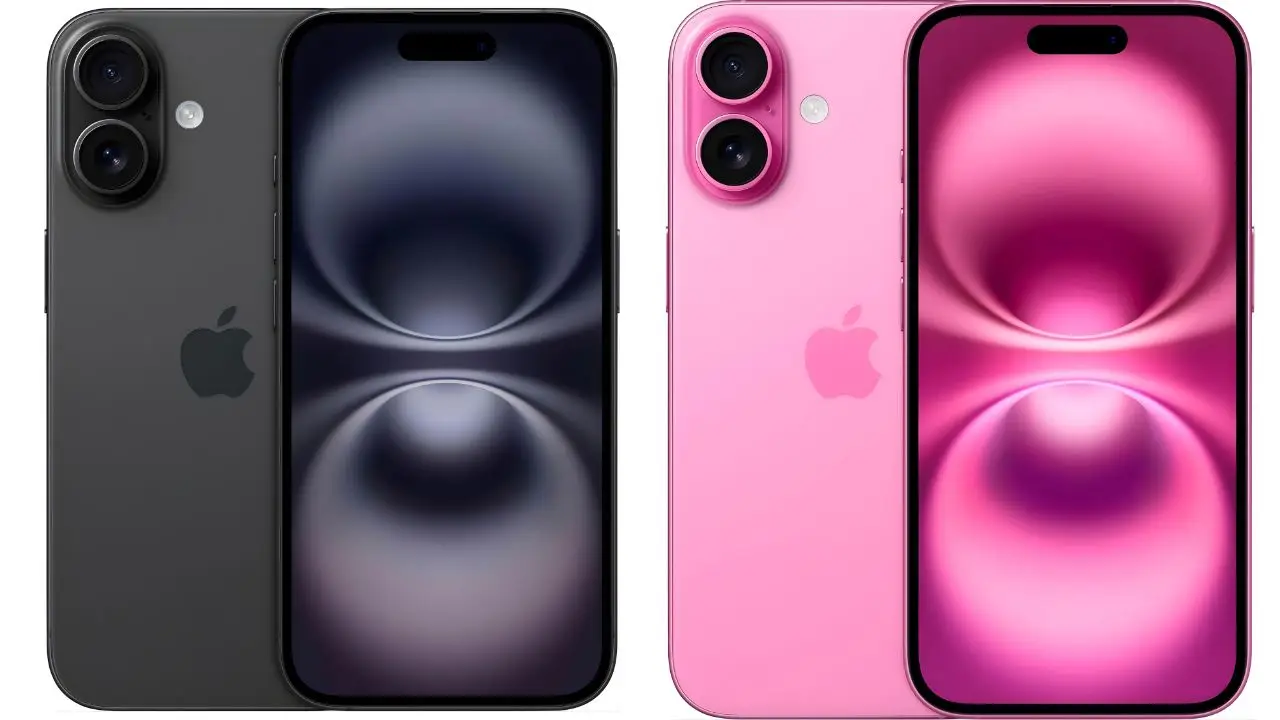
A friend of mine held out on upgrading his iPhone 12 for three full years, stubbornly insisting it still “worked fine” — until the day his camera app started freezing mid-shot at his sister’s wedding and he missed a moment he can’t get back. He called me the next day, resigned, and asked which iPhone he should actually buy. Not the flashiest one. Not the cheapest one. The one that makes sense. I told him the iPhone 16 without hesitation. He bought it, used it for two weeks, and texted me saying he should’ve done it a year earlier.
That story is why I wanted to write this review properly — not just a spec dump, but a genuine answer to whether the iPhone 16 is worth your money in 2026, almost two years after it launched.
Quick Facts: Release Date and What Apple Said at Launch
Apple announced the iPhone 16 series on September 9, 2024, at its “It’s Glowtime” event at the Steve Jobs Theater in Cupertino. Pre-orders started September 13, 2024, and the phone went on sale September 20, 2024. It launched as Apple’s first phone explicitly designed around Apple Intelligence — their generative AI system — and came with two brand-new physical buttons that changed how you interact with the camera.
That launch framing matters because it tells you something about who Apple built this phone for — not power users chasing specs, but everyday iPhone owners who wanted AI features and a better camera experience without paying Pro prices.
iPhone 16 Full Specs
| Feature | Spec |
|---|---|
| Display | 6.1-inch Super Retina XDR OLED, 2556 x 1179px, 461 PPI, 60Hz, 2000 nits peak |
| Chip | Apple A18 (3nm) |
| RAM | 8GB |
| Storage | 128GB / 256GB / 512GB |
| Main Camera | 48MP Fusion camera, F1.6, sensor-shift OIS |
| Ultrawide | 12MP, F2.2 |
| Front Camera | 12MP TrueDepth, autofocus |
| Video | 4K at 60fps, Dolby Vision HDR, Cinematic mode |
| Battery | 3,561mAh, up to 22hrs video playback |
| Charging | 25W wired, 25W MagSafe wireless, 7.5W Qi |
| OS (launch) | iOS 18 |
| Current OS | iOS 26 (as of May 2026) |
| Build | Aluminum frame, Ceramic Shield front and back |
| IP Rating | IP68 (6m, 30 minutes) |
| Dimensions | 147.6 x 71.6 x 7.8mm |
| Weight | 170g |
| Colors | Black, White, Pink, Teal, Ultramarine |
| Biometrics | Face ID (3D facial recognition) |
| Connectivity | 5G, Wi-Fi 7, Bluetooth 5.3, NFC, USB-C (USB 2.0) |
| Buttons | Action button + Camera Control (both new in 2024) |
Launch Price vs What It Costs Right Now
At launch in September 2024, the iPhone 16 started at $799 for the 128GB model — the same price as the iPhone 15 before it. The 256GB version was $899 and 512GB topped out at $1,099.
Fast forward to mid-2026, and the picture looks quite different. With the release of the iPhone 17 lineup in September 2025, the iPhone 16 shuffled down Apple’s lineup with a $100 price cut — it now starts at $699 new from Apple for the 128GB model. If you’re open to certified refurbished, Apple’s own refurbished store has the iPhone 16 starting at $619 — carrier-unlocked, with Apple’s one-year warranty. On the used market, platforms like Swappa have iPhone 16 listings starting from around $441 as of May 2026, depending on condition and storage size.
So here’s the honest value picture: a phone that launched at $799 eighteen months ago is now available new for $699, refurbished from Apple for $619, and used in good condition for $441–$500. That’s a meaningful shift. The iPhone 16 in mid-2026 is genuinely one of the best-value iPhones Apple has ever sold.
Design and Build: Still Feels Premium, No Regrets Here
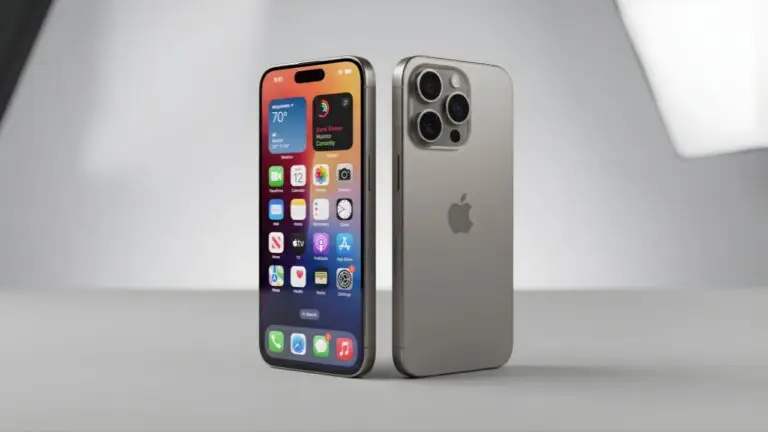
The iPhone 16 measures 147.6 x 71.6 x 7.8mm and weighs 170 grams — comfortably pocketable, genuinely one-hand usable, and light enough that you stop noticing you’re carrying it. The aluminum frame with Ceramic Shield front and back feels solid without being heavy. Apple moved to a vertical dual-camera layout on the back (replacing the diagonal arrangement from the iPhone 15), which enables spatial video capture — a small but real bonus if you ever use an Apple Vision Pro or want to future-proof your memory videos.
The five launch colors — Black, White, Pink, Teal, and Ultramarine — are all genuinely attractive. The Ultramarine is the standout, a deep saturated blue that photographs beautifully and looks richer in person than in product shots online (which, in my experience, is rare for phone colors — they usually look better in photos than real life).
IP68 rating means 6 meters for 30 minutes in water. That’s not just swimming-pool resistant, it’s survived-dropped-in-a-toilet-three-times reliable. I know people who’ve run their iPhone 14 through an entire wash cycle by accident and had it survive. The iPhone 16’s IP68 rating is real protection, not a marketing claim.
Display: Good, But This Is Where You Feel the Compromise
The 6.1-inch OLED panel looks great. Colors are vivid, black levels are deep, and the 2000-nit peak brightness handles outdoor reading without squinting. At 461 PPI the sharpness is excellent — text is crisp, photos look detailed.
But — and this is the honest part — the display runs at 60Hz. Not 120Hz ProMotion like the Pro models or even the iPhone 17 standard model. 60Hz means scrolling and animations don’t have that buttery smoothness you’d feel on any $700+ Android phone or the iPhone 17. If you’re coming from an iPhone 12 or 13, you won’t notice the lack of 120Hz because you’ve never had it. If you’re coming from an Android flagship or an iPhone 15 Pro, the step down is noticeable within the first ten minutes of use.
I’d push back on the people who say “60Hz is fine, you don’t notice it.” You might not notice it in a spec list. You do notice it in daily use, especially during long scrolling sessions or gaming. It’s not a dealbreaker, but it’s the single most significant hardware compromise in the iPhone 16 compared to its competitors at the same price point in 2026.
Camera: The 48MP Upgrade That Actually Made a Difference
The iPhone 16’s main camera is a 48MP Fusion sensor at F1.6 — a meaningful step up from the 12MP sensor that Apple used in the base iPhone through the iPhone 15 generation. That 48MP sensor does two things: it gives you sharper detail in full-resolution shots, and it enables 2x optical-quality zoom by cropping to the center 12MP of the sensor. Suddenly the base iPhone has three effective focal lengths — 13mm ultrawide, 24mm main, and 48mm 2x — without a third physical lens.
In my testing, daytime photography from the iPhone 16 is genuinely excellent. Colors are natural without being oversaturated, highlights are controlled, and detail is sharp enough for large prints. Night mode is reliable — not perfect in extreme low light, but consistently usable. The 12MP ultrawide is the weak link; it lacks autofocus (unlike the Pro models), which means macro photography isn’t a thing here.
The Camera Control button — a new touch-sensitive button on the right side of the phone — lets you launch the camera, take photos, adjust zoom, change settings, and start recording video without touching the screen. Is it the most life-changing feature Apple has ever shipped? No. But after two weeks of using it, you start reaching for it instinctively, and then you feel its absence immediately on any other phone… you get the idea.
Video Quality
The iPhone 16 shoots 4K at up to 60fps with Dolby Vision HDR. Cinematic mode — Apple’s shallow depth-of-field video with adjustable focus after recording — works at 4K 30fps. ProRes video is not available on the base iPhone 16 (that’s a Pro feature), but for most creators shooting social media or family content, the standard 4K output is among the best in its price range.
Performance: The A18 Chip Is Genuinely Overkill for Daily Use
Apple’s A18 chip — built on a 3nm process — is up to 30% faster than the A16 chip in the iPhone 15, according to Apple’s own benchmarks. In real use, the iPhone 16 handles everything without hesitation. Apps open instantly, multitasking is smooth, and games that push mobile hardware hard run without thermal throttling issues. The A18 includes a dedicated neural engine for Apple Intelligence tasks — writing summaries, image cleanup, Siri improvements — and that processing happens on-device rather than in the cloud, which is faster and more private.
Have you ever used a phone that felt fast when you bought it and slow two years later? The A18 chip is designed to avoid that trajectory. Apple Intelligence features will keep expanding over iOS updates, and the A18 has the processing headroom to handle those expansions for years. Apple typically supports iPhones for six to seven years of iOS updates — the iPhone 16 will likely receive software support through 2030 or 2031.
Battery Life: Better Than the iPhone 15, Still Not Class-Leading
Apple rates the iPhone 16 at up to 22 hours of video playback — an improvement over the iPhone 15’s 20-hour rating. In real daily use with a mix of social media, messaging, email, some photography, and occasional YouTube, the iPhone 16 comfortably gets through a full day on a single charge for most users. Heavy users — people who spend significant time on video calls, gaming, or GPS navigation — may find themselves at 15–20% by 9pm.
The charging story is less exciting. The iPhone 16 supports 25W wired charging and 25W MagSafe wireless charging. Wired charging gets you to 50% in about 30 minutes — acceptable, not impressive compared to Android flagships with 65W or 80W fast charging at the same price point. Apple still doesn’t include a charging brick in the box (just a USB-C cable), which remains frustrating for anyone who doesn’t already have a USB-C charger sitting around.
Apple Intelligence: Was It Worth the Hype?
The iPhone 16 and iPhone 16 Plus were Apple’s first consumer-focused flagships built specifically for Apple Intelligence. When the phone launched, Apple Intelligence was partially available — some features arrived with iOS 18.1, others in 18.2 and beyond. By mid-2026 running iOS 26, the full Apple Intelligence feature set is available: Writing Tools (rewriting, proofreading, summarizing), Image Playground (AI image generation), Clean Up (removing objects from photos), a smarter Siri with on-screen awareness and cross-app actions, and Priority Notifications.
Honestly, the features that get used most are the least flashy ones. Clean Up in Photos is genuinely good — remove a stranger from your vacation photo with one tap and the result is convincing. Writing Tools in Mail is useful for quickly reformatting a casual draft into something professional. Siri’s expanded intelligence is better than it was, though still not as impressive as what Google Assistant or ChatGPT deliver.
The thing nobody tells you about Apple Intelligence is that its real value compounds over time — each iOS update adds more capabilities, and the A18 chip handles them without slowing down. The iPhone 16 is essentially a platform that keeps getting more capable the longer you own it.
iPhone 16 vs iPhone 17: Is It Worth Spending the Extra $100?
The iPhone 17, released September 2025, starts at $799 — exactly $100 more than the iPhone 16’s current $699 price. Key differences include 120Hz ProMotion display, an upgraded 48MP ultrawide camera with autofocus, and a larger battery with the longest life ever in a standard iPhone.
In my experience, the 120Hz display difference alone is worth the $100 premium if you’re buying new. It’s the single most day-to-day noticeable upgrade between the two phones. If you’re buying used or refurbished and can get an iPhone 16 significantly below $699, the value calculation shifts in the iPhone 16’s favor — especially for users upgrading from an iPhone 12 or older, where everything about the iPhone 16 will feel like a major leap forward.
Should You Buy the iPhone 16 in 2026?
Buy the iPhone 16 if:
You’re upgrading from an iPhone 12, 11, or anything older. The jump in performance, camera quality, and Apple Intelligence support will feel dramatic and immediately worth it. At $699 new (or $619 refurbished from Apple), you’re getting 2024-generation flagship hardware at a genuinely fair price.
You want a compact, pocket-friendly iPhone that won’t strain your wrist or your budget. At 170 grams and 147.6mm tall, the iPhone 16 is one of the few remaining flagship phones that actually fits comfortably in a jeans pocket.
You care about long-term software support. Apple’s six-to-seven-year update history means the iPhone 16 will likely get iOS updates through 2030 — making it a smarter long-term investment than most Android phones in the same price range today.
Consider the iPhone 17 instead if:
You can stretch the extra $100 and you’ll notice the 120Hz display. The smoother scrolling and animation quality of ProMotion is a genuinely daily-life improvement that compounds over two or three years of ownership. Also worth considering the iPhone 17 if you shoot a lot of macro photography — the ultrawide autofocus is a real upgrade.
Consider a used iPhone 16 if:
Budget is the deciding factor. A well-maintained used iPhone 16 from Swappa or Apple’s refurbished store between $441–$619 is one of the best-value smartphones available in 2026 at any price point. Full Apple Intelligence support, a 48MP camera, A18 performance, and years of future software updates — for under $500.
Skip it entirely if:
You’re coming from an iPhone 15 or iPhone 16e. The upgrade isn’t significant enough to justify the cost. Save your money for the iPhone 18 Pro in September 2026, which is expected to bring under-display Face ID and significant design changes.
So here’s the question I’m genuinely curious about: are you still holding onto an iPhone that’s more than two years old, or did you already make the jump to the 16 or 17? Drop your current phone and your upgrade reason in the comments — I want to know whether the “wait until it breaks” approach or the “upgrade every two years” strategy actually wins out among real users.
Buy it from amazon