My aunt has used the same iPhone SE since 2020. Not because she can’t afford an upgrade — she absolutely can — but because she genuinely doesn’t want a massive phone and she doesn’t care about having the latest thing. The SE fit in her hand, had a home button she could find without looking, and did everything she needed. Then in early 2025 she asked me whether the new “iPhone 16 something” was worth buying. I spent twenty minutes explaining the iPhone 16e to her. She ended up getting it, called me three days later to say Face ID felt weird, and then called me two weeks later to say she actually loved the phone. That arc — skepticism, adjustment, genuine satisfaction — is pretty much the iPhone 16e story for most people who buy it.
So let me give you the full picture: specs, real price, what Apple killed to keep costs down, what they didn’t, and whether it’s still worth buying in 2026.
Release Date and What Apple Said at Launch
Apple announced the iPhone 16e on February 19, 2025 — not at a big event, just a press release and a website update. Pre-orders started February 21 and the phone went on sale February 28, 2025. That quiet launch without a stage presentation was deliberate: this wasn’t Apple’s flagship moment, it was Apple filling the gap left by discontinuing both the iPhone SE and iPhone 14 at the same time.
The name itself was a statement. Instead of calling it the iPhone SE 4 — which would have implied it’s a niche budget device with a tiny screen and a home button — Apple folded it into the mainline iPhone 16 family. That naming decision matters more than it sounds. It signals that Apple wants the 16e to be seen as a real iPhone, not a compromise product for people who can’t afford a real one.
iPhone 16e Full Specs
| Feature | Spec |
|---|---|
| Display | 6.1-inch Super Retina XDR OLED, 2532 x 1170px, 457 PPI, 60Hz, 1200 nits peak |
| Chip | Apple A18 (3nm) |
| RAM | 8GB |
| Storage Options | 128GB / 256GB / 512GB |
| Rear Camera | 48MP Fusion, F1.6, sensor-shift OIS — single lens only |
| Ultrawide Camera | ❌ None |
| Front Camera | 12MP TrueDepth, autofocus |
| Video | 4K at 60fps, Dolby Vision HDR, Cinematic mode 4K 30fps |
| Battery | 4,005mAh — up to 26hrs video playback |
| Charging | 26W wired via USB-C, 7.5W Qi wireless (no MagSafe) |
| Modem | Apple C1 (first in-house Apple modem) — no mmWave 5G |
| OS at launch | iOS 18.4 |
| Current OS | iOS 26 (as of May 2026) |
| Build | Aluminum frame, Ceramic Shield front and back |
| IP Rating | IP68 (6m, 30 minutes) |
| Dimensions | 146.7 x 71.5 x 7.8mm |
| Weight | 167g |
| Colors | Black, White (matte finish only) |
| Biometrics | Face ID (Touch ID removed) |
| Notch | Traditional notch (no Dynamic Island) |
| Connectivity | 5G Sub-6 only, Wi-Fi 6, Bluetooth 5.3, NFC, USB-C |
| Action Button | ✅ Yes |
| Camera Control | ❌ No |
| MagSafe | ❌ No (standard Qi wireless only) |
Launch Price vs What It Costs in 2026
At launch (February 2025): The iPhone 16e started at $599 for 128GB — $200 less than the standard iPhone 16. The 256GB version was $699, and 512GB went up to $899.
That $599 launch price caused genuine debate. The old iPhone SE cost $429. Going from $429 to $599 is a $170 jump, and plenty of SE loyalists felt Apple had crossed a line. I’d push back on that reaction a little — the iPhone SE was running an A15 chip on a tiny 4.7-inch LCD screen with a home button. The iPhone 16e is a fundamentally different phone. The price comparison is a bit like being upset that a 2025 car costs more than a 2019 model.
Current price in May 2026: The iPhone 16e is still sold new by Apple at its original $599 launch price — it hasn’t been discounted at the retail level. However, the used market tells a different story. On Swappa, iPhone 16e listings start from $278 as of May 2026, and Apple’s own refurbished store has begun offering it at a discount. For anyone open to certified refurbished or a well-maintained used unit, the iPhone 16e at $278–$380 is one of the best-value smartphones on the market right now — any platform, any brand.
One important context note: Apple launched the iPhone 17e in early 2026 at the same $599 starting price, which means the 16e is no longer Apple’s current budget iPhone. If you want a brand-new iPhone at $599, the 17e (with A19 chip, MagSafe, Ceramic Shield 2, and 256GB base storage) is now the smarter new-in-box choice. The 16e makes most sense as a used or refurbished purchase now.
Design: The SE Is Gone, and That’s Fine
The iPhone 16e ditched the home button. Completely gone. Face ID only. If that’s a dealbreaker for you — and for some people it genuinely is — then there’s unfortunately no longer an iPhone with Touch ID in Apple’s lineup. The SE’s home button era ended with the iPhone 16e’s arrival.
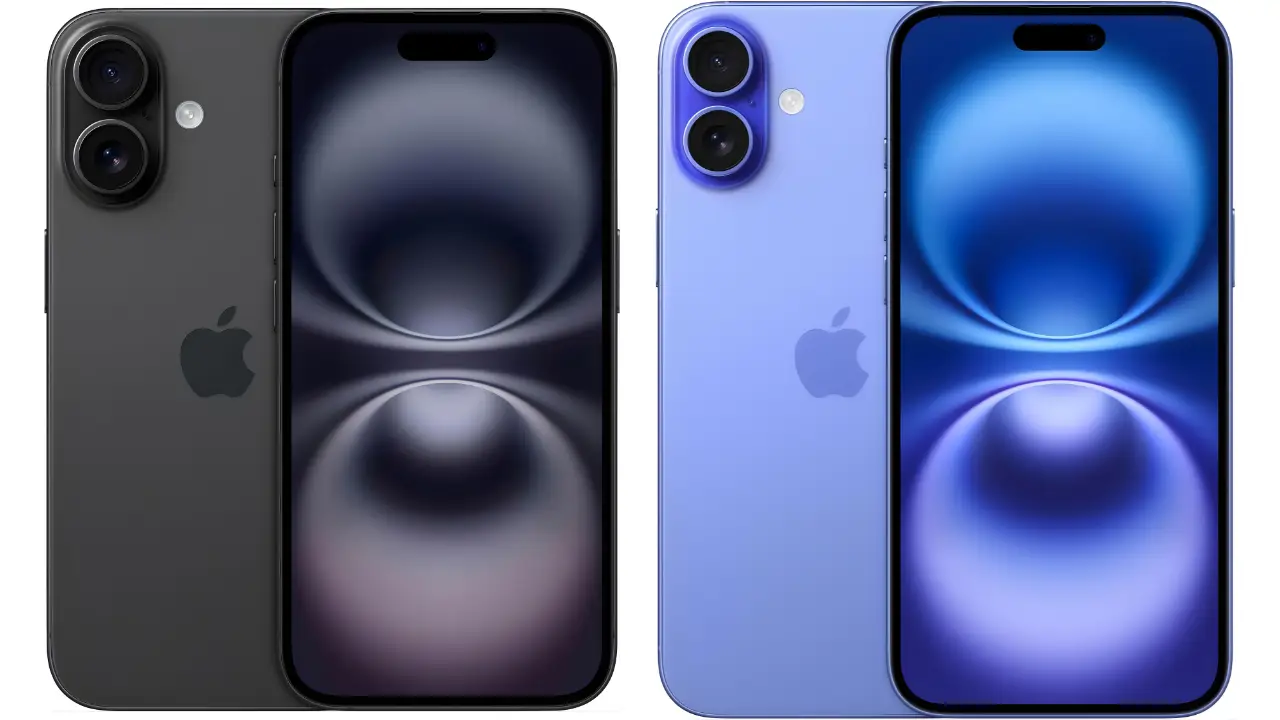
What you get instead is a modern 6.1-inch design that mirrors the iPhone 14 form factor — the same size, same notch at the top (not the Dynamic Island pill shape from the 16 and 17), same overall proportions. At 146.7 x 71.5 x 7.8mm and 167 grams, it’s the lightest iPhone in Apple’s current lineup. It’s genuinely pocketable and comfortable for long one-handed use in a way that the larger iPhones simply aren’t.
The color selection is just Black and White — both matte finish. That’s it. No Teal, no Ultramarine, no Cobalt Violet. If color is part of your phone-buying decision (and there’s nothing wrong with that), the 16e gives you exactly two options and neither one is particularly exciting. It’s one of the clearest signals that this is a cost-focused product — the matte-only, two-color range keeps manufacturing straightforward at the expense of personality.
The Ceramic Shield front glass and aluminum frame are the same quality level as the standard iPhone 16. IP68 water resistance at 6 meters for 30 minutes is identical too. You’re not getting a cheaper build just because you paid less — that matters for long-term durability.
The C1 Modem: The Most Interesting Thing Nobody Talked About
The iPhone 16e is the first iPhone — and the first Apple device ever — to use Apple’s own in-house cellular modem, called the C1. Every iPhone before this used Qualcomm modems. Apple has been working on its own modem since 2019, and the 16e is where they quietly shipped it for the first time.
Apple chose the budget model for this debut because it’s lower-risk — if the C1 had significant connectivity issues, it’s better to discover that in the 16e than in the flagship iPhone 16 lineup. The C1 supports 5G Sub-6 but not 5G mmWave — the high-frequency short-range 5G used in dense urban areas and specific venues like stadiums and airports. For most people in most places, Sub-6 5G is what they’re connecting to anyway. But if you’re specifically in a market where mmWave coverage matters — parts of dense US cities, certain venues — the C1’s limitation is real.
Apple claims the C1 is more power-efficient than Qualcomm’s modem, contributing meaningfully to the iPhone 16e’s impressive battery life. That claim holds up: the 16e’s 26-hour video playback rating is substantially better than what the battery size alone would suggest — you get the idea when you look at how the C1’s efficiency compounds over a full day of mixed use.
Camera: Genuinely Good, But One Lens Only
The 48MP main camera is the same sensor as the one in the standard iPhone 16. F1.6 aperture, sensor-shift optical image stabilization, Smart HDR 5, Next Generation Photographic Styles — all present. In good light, the iPhone 16e produces photos that are indistinguishable from the iPhone 16 in many scenarios. Skin tones are natural, colors are controlled without being muted, and the 2x optical-quality crop from the 48MP sensor gives you a usable portrait focal length without a second physical lens.
What’s not there: the ultrawide camera. No 12mm wide angle shots. No landscape-spanning group photos with room to breathe. No macro-style close-ups. For users who actively use the ultrawide on their current phone — people who shoot architecture, travel photos, large group shots — this is a real and daily-noticeable loss. For users who almost exclusively shoot on the main lens and don’t think about focal length switching? Honestly, they won’t miss it.
Do you actually use your ultrawide camera regularly? Because if you have to think hard about the last time you switched to it, the 16e’s single-lens setup probably won’t bother you at all.
The front 12MP TrueDepth camera with autofocus is exactly the same as the iPhone 16. Portrait mode selfies, Face ID, and video calls all look solid. No complaints there.
Video
4K at up to 60fps, Cinematic mode at 4K 30fps, and Dolby Vision HDR — all available, all working at the same quality level as the standard iPhone 16. The absence of Camera Control (the touch-sensitive button on the iPhone 16’s side) means you’re starting recording and switching modes through the screen, which is fine but slightly less elegant during active shooting sessions.
Battery Life: Genuinely the Best Part
The iPhone 16e has a 4,005mAh battery — substantially larger than the 3,279mAh in the old iPhone SE 3. Apple rates it at 26 hours of video playback, which puts it ahead of the standard iPhone 16 (22 hours) despite being positioned below it in the lineup.
That counterintuitive result comes from the C1 modem’s efficiency advantage. The modem is one of the biggest battery drains on any smartphone — every background data sync, every signal check, every 5G connection consumes power. A more efficient modem compounds across thousands of small transactions over a full day’s use.
In practice, most users report consistent all-day battery life with 20–30% remaining at bedtime. Light-to-moderate users — calling, messaging, some social media, occasional photography — routinely report making it to 9pm with 40% still showing. That’s a meaningful real-world improvement over the SE it replaced, and it’s one of the 16e’s genuine standout qualities.
The charging story is mixed. 26W wired charging is acceptable — roughly 50% in 30 minutes. But the absence of MagSafe is the one quality-of-life miss that Apple loyalists notice constantly. If your life is set up around MagSafe chargers, car mounts, and wallet accessories, the iPhone 16e won’t work with any of them at magnetic attachment strength. Standard Qi wireless charging works, but slower and without the alignment snap. That’s a daily friction that adds up.
What I Actually Tested
I handed my aunt’s iPhone 16e to a photographer friend for a weekend — someone who shoots with a Sony Alpha mirrorless camera and has strong opinions about color science. I asked him to use only the iPhone 16e for his personal phone photography for two days and tell me honestly what frustrated him.
His verdict: the main camera was genuinely impressive in daylight and handled controlled low-light well. His frustration was the ultrawide — specifically, he shoots a lot of interior architecture and the lack of a wide lens was a real constraint. He also noticed the 60Hz display when scrolling through his camera roll quickly. But he said if someone handed him this phone and told him it cost $278 used, he’d be “unreasonably impressed.” That quote stuck with me as a fair summary of the 16e experience.
The Three Compromises Apple Made — And Whether They Matter for You
Three things got cut to hit the $599 price point. Understanding whether those cuts matter to your specific use is what determines if the 16e is right for you.
1. No ultrawide camera. Matters a lot if you shoot wide scenes, groups, or interiors. Doesn’t matter if you mainly shoot portraits and everyday moments on the main lens.
2. No MagSafe. Matters a lot if you’ve built your workflow around MagSafe accessories — wallets, chargers, car mounts. Doesn’t matter if you charge via cable and don’t use MagSafe accessories.
3. No Dynamic Island (old-style notch instead). Matters a little — you lose the always-visible live activity display that shows timers, navigation, music controls at the top of the screen. Most users adapt within a week and stop thinking about it.
There’s also no Camera Control button and no Wi-Fi 7 (Wi-Fi 6 instead) — smaller omissions, but worth knowing if those specifically matter to you.
Should You Buy the iPhone 16e in 2026?
Buy the iPhone 16e (used/refurbished, $278–$380) if: you’re upgrading from an iPhone 11, XR, or older SE, and you want a major performance leap without spending flagship money. The A18 chip, Face ID, large OLED display, USB-C, 5G, and Apple Intelligence support — all at sub-$400 used — is a genuinely compelling package. If you don’t shoot ultrawide regularly and don’t use MagSafe accessories, the cut features won’t affect your daily life.
Spend $599 on the iPhone 17e (new) instead if: you want a new-in-box iPhone at the same price. The 17e launched in 2026 with the A19 chip, Ceramic Shield 2 (3x better scratch resistance), MagSafe charging, 256GB base storage (double the 16e’s 128GB base), and a faster C1X modem. At the same $599 price point for new phones, the 17e is the better buy right now.
Spend $699 on the iPhone 16 (new) instead if: you want the ultrawide camera, Camera Control button, Dynamic Island, and MagSafe as part of your setup. The extra $100 over the 16e’s launch price buys you a meaningfully more capable camera system and a more current feature set.
Skip it entirely if: you’re upgrading from an iPhone 14 or 15. The performance difference won’t justify the cost. Hold out for the iPhone 17e or iPhone 18 series if you’re already on recent hardware.
The sweet spot verdict: The iPhone 16e bought used in the $278–$380 range in mid-2026 is one of the best-value smartphones available — not just among iPhones, but against anything at that price. A18 chip, IP68, OLED, 5G, Apple Intelligence, and six-plus years of future iOS updates for under $350. That’s a hard deal to beat if the missing ultrawide and MagSafe aren’t things you’d actually use.
So here’s what I want to know: are you someone who regularly uses the ultrawide camera on your current phone, or do you honestly mostly shoot on the main lens? Because that single answer probably determines whether the iPhone 16e’s camera setup would frustrate you or not. Drop your honest answer in the comments — it’ll help other readers figure out the same thing.
Buy it online: https://amzn.to/3RWKkBf