My cousin called me last month, genuinely stressed, standing in an Apple Store. “They’re pushing me toward the Pro,” he said, “but the Plus is right there and it’s $200 cheaper and I don’t know what I’m missing.” I told him to put the salesperson on hold and let me walk him through it. That conversation is basically what this article is.
Because honestly, the iPhone 16 Plus is one of the most misunderstood phones Apple makes. It’s not a budget phone. It’s not a stripped-down compromise. It’s a very specific device built for a very specific kind of person — and if that person is you, it’s actually a great buy right now.
Let me break it all down.
Quick Specs at a Glance
Before we get into the “should you actually care” part, here are the hard numbers:
| Feature | Details |
|---|---|
| Display | 6.7-inch Super Retina XDR OLED |
| Resolution | 2796 x 1290 pixels (460 PPI) |
| Refresh Rate | 60Hz |
| Chipset | Apple A18 (3nm) |
| RAM | 8GB |
| Storage Options | 128GB / 256GB / 512GB |
| Rear Camera | 48MP main + 12MP ultrawide |
| Front Camera | 12MP TrueDepth |
| Battery | 4,674 mAh |
| Charging | 25W wired, 15W MagSafe wireless |
| OS (Launch) | iOS 18 |
| 5G | Yes |
| IP Rating | IP68 (6 meters, 30 minutes) |
| Face ID | Yes (Dynamic Island) |
| Colors | Black, White, Pink, Teal, Ultramarine |
| Weight | 199g (7.02 oz) |
| Dimensions | 160.9 x 77.8 x 7.8 mm |
| SIM | eSIM only (US models) |
Release Date and Launch Price
Apple officially announced the iPhone 16 Plus on September 9, 2024, and it hit shelves on September 20, 2024 — right on schedule with Apple’s usual fall pattern.
At launch, the pricing was:
- 128GB: $899
- 256GB: $999
- 512GB: $1,199
That was the “ouch” moment. $899 for a phone without 120Hz, without a telephoto lens, without ProMotion — yeah, a lot of people looked at the $999 iPhone 16 Pro and did the math.
Current Price in 2026 — This Is Where It Gets Interesting
Here’s the thing nobody was telling you a year ago: Apple has since dropped the new price. With the iPhone 17 lineup out, the 16 Plus now starts at $799 brand new from Apple directly. That’s a $100 cut from launch.
If you’re open to certified refurbished, Apple’s own refurbished store had the iPhone 16 Plus starting at $699 earlier this year. And on the used market (Swappa as of May 2026), you’re looking at $381 and up depending on condition and storage.
That price trajectory changes the whole conversation. At $799 new, this phone is significantly easier to recommend.
Design — Still Premium, Not Flashy
In my experience, the Plus has always been the “quiet confidence” option in Apple’s lineup. No titanium frame (that’s Pro territory). You get aluminum sides and glass back, which — honestly — most people prefer in-hand anyway. Titanium sounds impressive until you feel how slippery it is without a case.
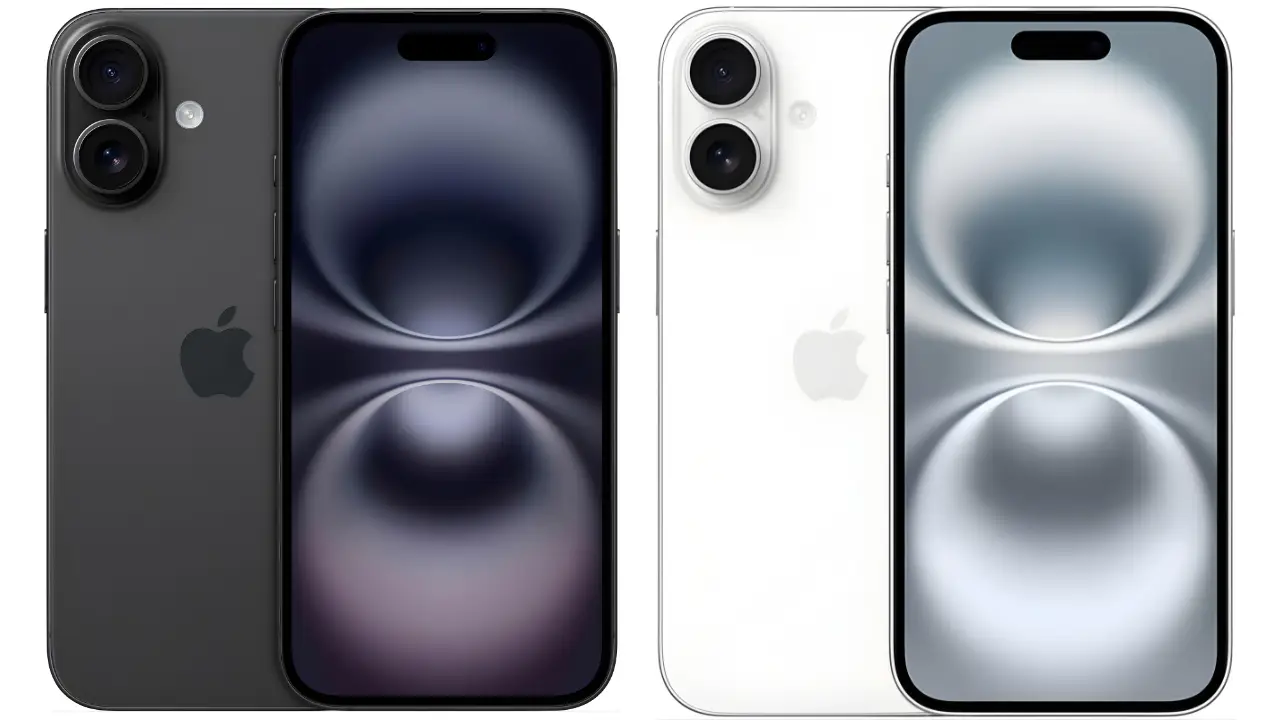
The phone comes in five colors: Black, White, Pink, Teal, and Ultramarine. Ultramarine is the standout — it’s a deep blue that doesn’t look garish or childish. Teal is surprisingly nice too.
It’s big. Like, genuinely big. At 160.9mm tall and 77.8mm wide, this thing won’t disappear in your pocket. If you’re coming from an iPhone 14 or earlier standard model, be prepared. The 199g weight means you’ll feel it. But for anyone who’s always wanted a bigger screen without paying Pro Max prices — this is it.
Display — Great, But the 60Hz Thing Is Real
The 6.7-inch OLED panel is genuinely gorgeous. Deep blacks, 2000 nits of outdoor brightness, Dolby Vision support, HDR10. Watching movies on this thing is legitimately good.
But here’s where I’d push back on some of the hype: 60Hz in 2024-2025 is a real limitation. Scrolling social media, swiping between apps — once you’ve used a 120Hz phone (the iPhone 16 Pro, a Samsung Galaxy S25, anything with ProMotion) going back to 60Hz does feel different. It’s not dramatic, but it’s there.
The thing nobody tells you is that this was a deliberate Apple choice to keep the Pro lineup feeling worth the premium. It’s a business decision wearing the costume of a spec sheet. You’re not getting 60Hz because Apple couldn’t fit 120Hz in here — the phone is physically larger than the 16 Pro. You’re getting 60Hz because Apple decided you should pay more for smoothness.
Is that a dealbreaker? For most people watching YouTube in bed or texting their friends? No. For anyone who’s used ProMotion daily and got used to it? It’ll bother you.
Performance — The A18 Chip Is No Joke
This is where the 16 Plus genuinely earns its price tag. The A18 chip — the same chip in the standard iPhone 16 — is a beast. It handles Apple Intelligence features, runs demanding games without breaking a sweat, and will stay fast for years.
Here’s a real-world example: I handed one to a friend who edits short-form video on his phone. He ran a 4K timeline with three color corrections applied and no proxy media. It played back smoothly. On a phone. That kind of performance headroom is what justifies the Apple ecosystem price premium, honestly.
The A18 is also what makes Apple Intelligence work — the on-device AI features like writing tools, photo editing, notification summaries, and the upgraded Siri. Not all of these were available everywhere at launch (Apple rolled them out in phases), but by early 2025, most regions had the full suite.
Does anyone actually need all that AI stuff? That’s a fair question. Some of it is genuinely useful (notification summaries, Clean Up in photos). Some of it is… you get the idea.
Camera — Solid But No Telephoto
The camera system on the 16 Plus is a dual setup: 48MP main + 12MP ultrawide.
The main 48MP shooter is excellent. Colors are natural, dynamic range is strong, and low-light performance got a meaningful bump over the 15 Plus thanks to improved processing. The ultrawide also got upgraded — Apple bumped it from f/2.4 to f/2.2 (borrowed from the 15 Pro’s system), which means better light capture and autofocus for close-up macro-style shots.
The Camera Control button — a new hardware addition for 2024 — is legitimately useful once you get used to it. It’s a clickable, pressure-sensitive strip on the right side of the phone. You can use it to launch the camera, zoom, adjust exposure, or shoot without touching the screen. It takes maybe a week to feel natural, but after that, I don’t think I’d want a phone without it.
What’s missing? A telephoto lens. The 16 Plus does a 2x optical-quality zoom (cropped from the 48MP sensor) but there’s no dedicated telephoto camera like you’d find on the Pro. If you shoot sports, concerts, wildlife, or anything where you need to pull in distant subjects — that gap is real.
Battery Life — The Best Argument for Buying This Phone
This is the iPhone 16 Plus’s actual superpower. Consumer Reports clocked it at 47 hours of battery lifespan in their testing. Real-world screen-on time consistently exceeds 7 hours for most users. That’s exceptional for a non-Max iPhone.
The 4,674 mAh cell combined with the efficiency of the A18 chip on iOS makes this one of the best-lasting mainstream iPhones Apple has ever made. If you’re someone who ends the day with 8% battery anxiety and you’ve been living in “low power mode from 2pm,” the Plus will genuinely change that for you.
The one catch: charging isn’t fast. 25W wired is fine but not thrilling when Android flagships are hitting 45W and 65W. Wireless MagSafe maxes at 15W. You’re charging overnight, not speed-topping before a meeting.
Should You Buy the iPhone 16 Plus?
Let’s be direct about who this phone is and isn’t for.
✅ Buy It If:
- You want the biggest screen in a non-Pro iPhone without paying Max prices
- Battery life is your top priority — seriously, this thing lasts
- You’re upgrading from an iPhone 13 or earlier (the jump in performance and camera will feel massive)
- You’re an Apple ecosystem user who doesn’t need a telephoto camera
- You want Apple Intelligence on a budget-friendlier device
- The current $799 new price or a refurbished deal at $699 fits your budget
❌ Skip It If:
- You can’t live without 120Hz (or have used ProMotion before)
- You need a telephoto lens for zoomed photography
- The $799 price feels steep — at that point, the iPhone 17 is only $799 too, and it’s a newer chip with better cameras (seriously, check the 17 before committing)
- You want an always-on display
- You’re on a tight budget — a refurbished iPhone 15 Plus at $354 on Swappa does most of the same things for less
The Honest Middle Ground
The iPhone 16 Plus at its launch price of $899 was a tough sell. At its current $799 new price, it makes much more sense — especially for anyone in the Apple ecosystem who just wants a big screen, great battery, solid camera, and A18 performance without overthinking it.
But here’s what I’d tell my cousin (and what I did tell him, actually): if you’re buying new in mid-2026, spend twenty minutes looking at the iPhone 17 first. At $799 it’s the same price as the 16 Plus, newer chip, better cameras, and double the base storage at 256GB. The 16 Plus is a great phone — it’s just no longer the best value at that price point unless you find a deal on it.
Buy used? Absolutely. $381-$500 for a used 16 Plus in good condition is genuinely excellent value right now.
Final Thought
The iPhone 16 Plus isn’t a flashy phone. It doesn’t have the specs-sheet bragging rights of the Pro, and it won’t win a 120Hz scrolling comparison. But it’s well-built, it runs fast, the battery is genuinely great, and the camera is very good for 95% of what people actually photograph.
Sometimes the right phone isn’t the most exciting one — it’s the one that never lets you down. For a lot of people, that’s exactly what the 16 Plus is.
What about you? Are you considering the iPhone 16 Plus, or are you weighing it against the iPhone 17 or something from the Android side? Drop your situation in the comments — screen size preference, whether battery or camera matters more to you, what you’re upgrading from — and I’ll tell you exactly which direction I’d go.