
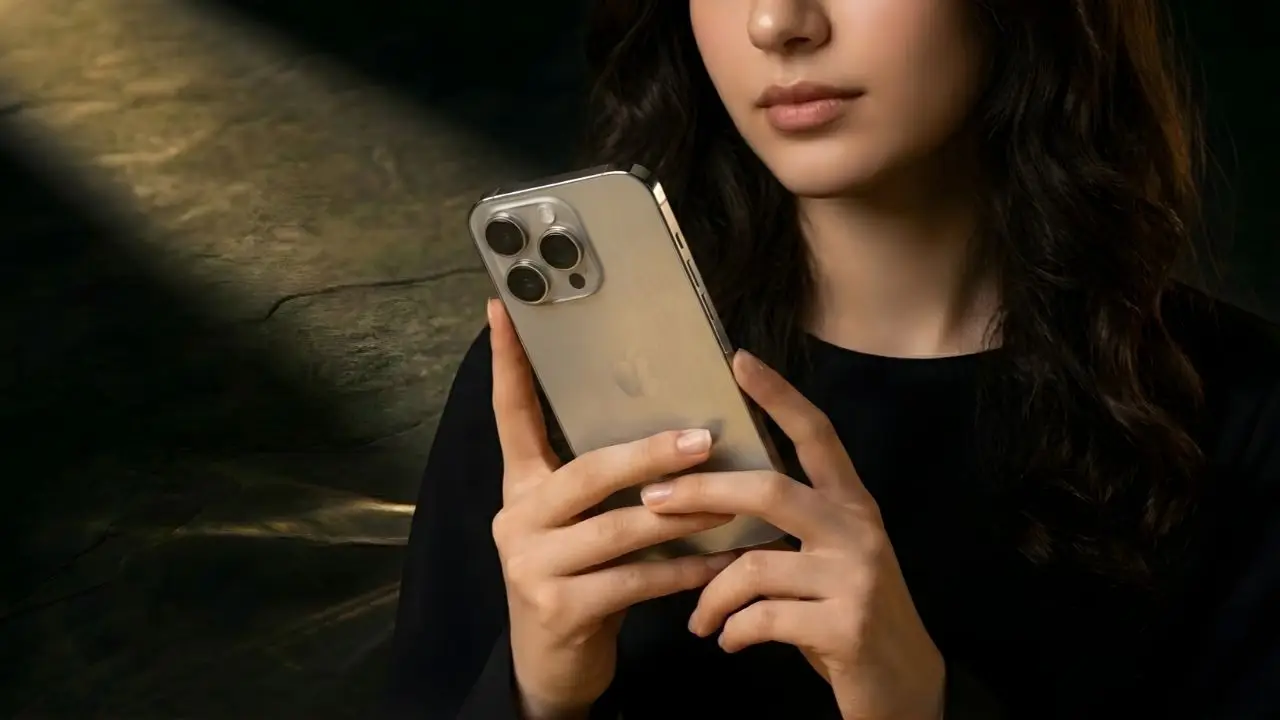
A photographer friend of mine — the kind who owns three camera bags and has strong opinions about lenses — spent two weeks with the iPhone 17 Pro and then sold his Sony a7C. Not as a backup. Sold it entirely. He said the 17 Pro’s triple 48MP system had made him realize he was carrying the Sony mostly out of habit. I thought he was exaggerating. Then I spent a week with the phone myself, and honestly, I get it now.
That’s not nothing. That’s a genuinely important thing to understand about what Apple did with the iPhone 17 Pro.
So let’s talk about it — the specs, the price, what it’s like to actually live with, and whether it’s worth your money in 2026.
Release Date and Announcement
Announced: September 9, 2025, at Apple’s “Awe Dropping” event at Steve Jobs Theater.
Pre-orders opened: September 12, 2025.
Available to buy: September 19, 2025.
The 2025 event was dominated by the iPhone Air — the impossibly thin 5.6mm newcomer that everyone kept photographing side-on — but the iPhone 17 Pro quietly made the stronger argument on spec sheets. If you watched the keynote thinking the Pro felt like the boring option that year, I’d push back on that hard. The Air got the headlines. The Pro got the substance.
Full Specs at a Glance
| Specification | Details |
|---|---|
| Announced | September 9, 2025 |
| Released | September 19, 2025 |
| Display | 6.3-inch Super Retina XDR OLED, ProMotion 1–120Hz (LTPO), Always-On, 3000 nits peak brightness |
| Chipset | Apple A19 Pro (3nm) — 6-core CPU (2 performance + 4 efficiency), 6-core GPU with Neural Accelerators, 16-core Neural Engine |
| RAM | 12 GB LPDDR5X |
| Storage Options | 256 GB / 512 GB / 1 TB (no microSD slot) |
| Main (Wide) Camera | 48 MP, f/1.78, 24mm, sensor-shift OIS, dual-pixel PDAF, 4K@120fps |
| Ultra-Wide Camera | 48 MP, f/2.2, 13mm, PDAF, macro photography, 4K@60fps |
| Telephoto Camera | 48 MP, f/2.8, 4× optical zoom (100mm equivalent), sensor-shift OIS — up to 8× optical-quality zoom; 4K@60fps |
| Front Camera | 18 MP Center Stage (square sensor — shoots vertical or horizontal), f/1.9, autofocus, 4K@60fps |
| Video | 4K@120fps (main), ProRes, Dolby Vision, Cinematic mode, Spatial Video, Dual Capture |
| Battery | ~3,998 mAh / up to 33 hours video playback |
| Charging | Fast charge to 50% in ~20 minutes (40W+ adapter); MagSafe 25W; Qi2 wireless |
| Cooling | Apple-designed vapor chamber, laser-welded into aluminum chassis — conducts heat through the entire unibody |
| Build | Heat-forged aerospace-grade 7000-series aluminum unibody, Ceramic Shield 2 front (3× better scratch resistance), Ceramic Shield back (4× more crack-resistant) |
| Biometrics | Face ID |
| Water Resistance | IP68 |
| Connectivity | 5G (sub-6GHz, 20+ bands), Wi-Fi 7, Bluetooth 6, NFC, USB-C (USB 3), eSIM |
| Operating System | iOS 26 (ships with it; currently on iOS 26.4.x) |
| Dimensions | Approx. 149.6 × 71.5 × 8.8 mm |
| Weight | 206 g |
| Colors | Silver, Cosmic Orange, Deep Blue |
| Special Buttons | Action Button, Camera Control Button |
| Launch Price (256 GB) | $1,099 |
| Launch Price (512 GB) | $1,299 |
| Launch Price (1 TB) | $1,499 |
| Current Price (May 2026) | $1,099 new — available at Apple, Best Buy, T-Mobile, Verizon, AT&T; no meaningful discounts yet on new units |
Price — What Changed, and What Didn’t
The iPhone 17 Pro starts at $1,099 — that’s $100 more than the iPhone 16 Pro’s $999 launch price. Apple justified the bump by doubling the base storage from 128 GB to 256 GB, which is a real improvement if you shoot ProRes video or keep a lot of media on-device. Whether that trade-off feels fair depends entirely on whether you were already hitting 128 GB. In my experience, most people who shoot a lot of video were.
As of May 2026, the price hasn’t moved at Apple or any of the major US carriers. Carrier deals through T-Mobile and Verizon can bring the effective monthly cost down significantly with trade-ins — especially if you’re coming from an iPhone 14 Pro or older. Apple’s financing option splits the $1,099 into 24 monthly payments at 0% APR, which softens the hit somewhat. If you’re hunting for genuine used-market savings, it’s still early — the 17 Pro is only eight months old, and resale prices are still holding close to retail.
What the iPhone 17 Pro Is Actually Like to Use
The Design Overhaul — Why It Actually Matters
The biggest change you’ll notice in person isn’t the cameras. It’s the build. Apple ditched titanium (which debuted on the iPhone 15 Pro and lasted exactly two generations) and replaced it with an aerospace-grade aluminum unibody — a single piece of heat-forged 7000-series aluminum that forms the entire frame and back of the phone. The “plateau” camera housing on the rear is part of the same piece of metal.
This isn’t just an aesthetic call. The aluminum unibody is thermally conductive, which means Apple could integrate a vapor chamber cooling system directly into the chassis — sealed deionized water that pulls heat away from the A19 Pro chip and distributes it across the whole body. The result is that the iPhone 17 Pro can sustain peak A19 Pro performance for longer than any previous iPhone without thermal throttling. The phone stays comfortable to hold even during extended gaming or 4K video capture sessions. That’s a real engineering achievement, and it’s one of those things that doesn’t show up in a spec sheet but absolutely shows up in everyday use.
The three available colors — Silver, Deep Blue, and Cosmic Orange — lean bold in a way the titanium lineup never did. Cosmic Orange in particular is a statement. I’d have predicted it would feel gimmicky. It doesn’t. It looks genuinely striking.
The Camera System: Three 48MP Lenses, Finally
Here’s the thing about the iPhone 17 Pro cameras: for the first time ever, all three rear lenses are 48 megapixels. Main, ultra-wide, telephoto — all 48 MP. That’s a first for any iPhone. What does it mean in real use?
For the average person taking portraits, food photos, and travel shots, the main 48 MP wide camera is excellent — the same caliber as the 16 Pro Max, which was already class-leading. The ultra-wide has been strong since the 16 Pro generation. The new story here is the telephoto. The iPhone 17 Pro’s telephoto shoots at 4× optical zoom (100mm equivalent) with the same 48 MP sensor as the other two lenses, and it supports up to 8× optical-quality zoom through intelligent sensor cropping. The previous iPhone 16 Pro was capped at 5×. That extra reach makes a genuine difference for event photography, candids across a room, wildlife — any situation where you need to pull in a subject that’s thirty or forty feet away.
Are you the kind of person who shoots a lot of zoom photos and feels constrained by what a phone camera can do? If yes, the 17 Pro’s telephoto system is the most significant upgrade in this lineup. It’s not a toy zoom that degrades at 6×. It holds up.
Low-light performance is excellent across all three cameras, with the A19 Pro’s updated image signal processor handling noise reduction and dynamic range in ways the A18 Pro generation couldn’t quite match. Night Mode photos from the ultra-wide in particular are noticeably cleaner. Video at 4K/120fps — available from the main camera — is smooth enough to genuinely be used for professional B-roll.
The Front Camera Got Quietly Excellent
The 18 MP Center Stage front camera is shared with the regular iPhone 17, but it deserves a mention here because the upgrade from 12 MP is significant. The square sensor design lets you shoot selfies horizontally or vertically without rotating the phone — the camera just adapts. For video calls, FaceTime, and content creators who film themselves, this is immediately noticeable. In my experience, the old front camera limitation was something people had quietly accepted as normal. You stop accepting it within two days of using this one.
The A19 Pro Chip and Battery Life
The A19 Pro is a meaningful leap over the A18 Pro — specifically because of the vapor chamber cooling system. Without thermal throttling under sustained load, the chip can run at full speed for longer stretches. Apple claims up to 40% faster sustained performance than the A18 Pro. For most daily tasks — web browsing, messaging, social media, streaming — this is invisible. You won’t feel it. Where you will feel it is in ProRes video recording, graphic-intensive games, on-device AI tasks through Apple Intelligence, and long video export sessions. The chip doesn’t flinch.
Battery life is the other headline. The iPhone 17 Pro lasts up to 33 hours of video playback — Apple’s longest ever for the non-Max Pro model at launch. Real-world numbers back this up: the aluminum unibody freed up internal space for a larger battery, and the A19 Pro’s efficiency means less draw in the first place. Heavy users report comfortably getting through a full working day plus an evening with 20–30% still in the tank. That wasn’t always guaranteed on the 16 Pro.
iOS 26 and Liquid Glass
The iPhone 17 Pro ships with iOS 26, which introduced a “Liquid Glass” design language — layered transparency effects across the OS that dynamically reflect whatever’s beneath them. It’s a visual overhaul that’s genuinely beautiful in the right moments, and slightly confusing in others (transparent navigation bars occasionally make it hard to tell what’s tappable — you get used to it after two weeks, but the learning curve is real). Live Translation in Messages, FaceTime, and Phone calls is the standout practical feature for anyone who communicates across languages. Apple Intelligence’s on-device AI features run noticeably faster on the A19 Pro’s Neural Accelerators than they did on the A18 Pro; Image Playground and writing tools feel snappier in a way that becomes obvious if you use them regularly.
The Honest Downsides
The 17 Pro is heavier than you’d expect at 206 grams — lighter than the 15 Pro’s stainless steel era, but heavier than the regular iPhone 17’s 177 grams. It’s perceptible in your pocket after a few hours. Not uncomfortable, but worth mentioning if weight is a factor.
The Action Button and Camera Control button returned without meaningful updates. The Camera Control is still slightly finicky for precise adjustments — a complaint that reviewers raised about the 16 Pro version too, and Apple apparently didn’t prioritize fixing it for this generation. It’s not a dealbreaker, just a known frustration… you get the idea.
Apple also still doesn’t include the 40W adapter in the box. For fast charging, you’re buying that separately at $39.
iPhone 17 Pro vs. iPhone 17 — Is the $300 Gap Worth It?
The regular iPhone 17 costs $799 and the 17 Pro costs $1,099 — a $300 difference. Both have ProMotion 120Hz displays, the new 18 MP front camera, and strong main cameras. The Pro adds: a dedicated telephoto lens, triple 48 MP system, A19 Pro chip (vs. A19), vapor chamber cooling, aluminum unibody design, 12 GB RAM (vs. 8 GB), and better sustained performance. The Pro also has stronger video specs — 4K@120fps vs. the standard iPhone 17’s 4K@60fps.
If you don’t shoot zoom photos, don’t record 4K video, and aren’t pushing heavy AI features, the regular iPhone 17 at $799 is genuinely excellent and the $300 gap is hard to justify. If cameras are important to you, if you edit video on your phone, or if you want a phone that runs demanding workloads without slowing down — the Pro makes sense.
Should You Buy the iPhone 17 Pro?
Yes, Buy It If…
- You’re coming from an iPhone 14 Pro or older. The jump in camera capability, sustained chip performance, battery life, and display quality is enormous — every single part of the daily experience improves.
- Photography or videography matters to you. Triple 48 MP cameras, 4K@120fps, 8× optical-quality zoom, and ProRes support make this a genuinely professional-tier imaging tool in a pocket-sized package.
- You want the best non-Max iPhone Apple makes. The 17 Pro packs all the Pro camera and performance features in a 6.3-inch, 206g frame. If the 17 Pro Max’s 6.9-inch screen feels too large, this is your answer.
- You care about longevity. With 12 GB RAM, A19 Pro, iOS 26 support expected well past 2031, and vapor chamber cooling extending the life of peak chip performance, this phone is built to stay relevant for five or six years.
Skip It If…
- You have a 16 Pro. The cameras are better, the battery is better, and the design is fresher — but unless you’re shooting professionally or feeling the battery limits of your 16 Pro every single day, it’s hard to make the math work on a year-old upgrade.
- Budget is the top concern. The iPhone 17 at $799 is an excellent phone with a great camera. For most people who aren’t pushing professional creative work on their phone, $300 is a lot of money to save.
- You want maximum screen real estate. The 17 Pro Max at $1,199 has a 6.9-inch display and the best battery life of any iPhone ever made — 39 hours. If you watch a lot of video and want every inch of screen, that’s the one.
The bottom line: the iPhone 17 Pro is the best compact Pro iPhone Apple has ever built. The vapor chamber cooling and aluminum unibody aren’t just talking points — they’re the reason the A19 Pro can actually deliver on its performance promises over sustained workloads, and they’re the reason battery life finally made the jump that Pro users had been waiting for. At $1,099, it’s expensive. But for photographers, videographers, and power users upgrading from a 2022 or older Pro device, it earns every dollar.
I’m genuinely curious — are you considering the 17 Pro, or are you leaning toward the Pro Max for that bigger display and longer battery? Or maybe the regular iPhone 17 at $799 has you convinced the Pro gap isn’t worth it this year? Drop your thinking in the comments. I want to hear what’s actually driving the decision for you.