I remember standing at the Apple Store on Fifth Avenue in New York last September, and this woman next to me — businesswoman, mid-forties, clearly used to carrying everything in a small structured bag — picked up the iPhone Air from the display table, held it for about four seconds, and said to nobody in particular: “Oh. Oh, this is different.” Then she just stood there holding it. She bought one before she left. I watched the whole thing.
That reaction — that wordless, physical understanding of what the iPhone Air is — tells you more about this phone than any spec sheet can. It’s a phone you have to hold. Once you do, you either get it immediately or you don’t.
So let’s talk about it honestly — because this is also a phone with real compromises, and you deserve to know both sides before spending $999.
Release Date and Announcement
Announced: September 9, 2025, at Apple’s “Awe Dropping” event, Steve Jobs Theater, Cupertino.
Pre-orders opened: September 12, 2025.
In stores: September 19, 2025 — available worldwide.
The iPhone Air replaced the Plus model entirely — there’s no iPhone 17 Plus. Apple reshuffled the 2025 lineup to: iPhone 17, iPhone Air, iPhone 17 Pro, and iPhone 17 Pro Max. The Air was unquestionably the star of the September event. The Pro models had the better cameras and specs on paper, but the Air had the room’s attention.
Full Specs
iPhone Air2025
| Design & Build | |
| Thickness | 5.64 mm (body) / ~6.9 mm with camera bump Thinnest iPhone ever |
| Dimensions | 156.2 × 74.7 × 5.64 mm (6.15 × 2.94 × 0.22 in) |
| Weight | 165 g (5.82 oz) |
| Frame Material | Grade 5 Titanium |
| Back Glass | Ceramic Shield (4× more crack-resistant than standard glass) |
| Water Resistance | IP68 |
| Colors | Space Black, Cloud White, Light Gold, Sky Blue |
| SIM | eSIM only — worldwide (first iPhone to go eSIM-only globally) No physical SIM slot |
| Display | |
| Size | 6.5-inch Super Retina XDR OLED |
| Resolution | 2736 × 1260 pixels at 460 ppi |
| Refresh Rate | ProMotion 1–120Hz (LTPO adaptive) — Always-On 120Hz on a non-Pro iPhone for the first time |
| Peak Brightness | 3,000 nits (outdoor peak) / 1,000 nits (typical) |
| Display Features | True Tone, Wide Color (P3), HDR10, Dolby Vision, Dynamic Island |
| Protection | Ceramic Shield 2 front glass |
| Performance | |
| Chipset | Apple A19 Pro (3nm) — 6-core CPU (2 performance + 4 efficiency) 5-core GPU (one fewer core than iPhone 17 Pro) |
| RAM | 12 GB LPDDR5X |
| Storage Options | 256 GB / 512 GB / 1 TB (no microSD) |
| Neural Engine | 16-core, Neural Accelerators per GPU core — Apple Intelligence supported |
| Cooling | No vapor chamber (thermal management limited by 5.64mm body thickness) |
| Cameras | |
| Rear Camera System | Single lens only No ultra-wide, no telephoto |
| Main (Wide) Camera | 48 MP, f/1.6, 26mm, sensor-shift OIS, dual-pixel PDAF, 4K@60fps Dolby Vision |
| Zoom | 2× optical-quality (sensor crop) — no dedicated telephoto lens |
| Front Camera | 18 MP Center Stage (square sensor — shoots vertical or horizontal), f/1.9, autofocus, 4K@60fps Same 18MP as iPhone 17 Pro |
| Video | 4K@60fps, Dolby Vision, Cinematic mode, Action mode — no ProRes, no 4K@120fps |
| Battery & Charging | |
| Battery Capacity | 3,149 mAh Smallest battery in the 2025 iPhone lineup |
| Battery Life | Up to 27 hours video playback |
| Wired Charging | USB-C, up to 20W USB 2.0 speeds (480 Mb/s) — not USB 3 |
| Wireless Charging | MagSafe 25W, Qi2 compatible |
| Audio | |
| Speakers | Mono — single earpiece speaker only No stereo / no bottom-firing speaker |
| Connectivity | |
| Cellular | 5G (sub-6GHz, 20+ bands), Apple C1 modem |
| Wi-Fi / Bluetooth | Wi-Fi 7, Bluetooth 5.3, NFC, UWB |
| Port | USB-C (USB 2.0 — 480 Mb/s) |
| Software & Biometrics | |
| Operating System | iOS 26 (ships with it; currently iOS 26.4.x) |
| Biometrics | Face ID (Dynamic Island notch) |
| Special Buttons | Action Button — no Camera Control button |
| Pricing | |
| Launch Price (256 GB) | $999 |
| Launch Price (512 GB) | $1,199 |
| Launch Price (1 TB) | $1,399 |
| Current Price (May 2026) | $999 new at Apple, Best Buy, and major carriers. Some carrier trade-in promos offer up to $1,100 off. |
Specs verified May 2026 · apple.com
Price — Where It Sits in the Lineup
At $999, the iPhone Air sits in an unusual middle position. It’s $200 more than the iPhone 17 at $799, and just $100 less than the iPhone 17 Pro at $1,099. That sandwich is, honestly, part of why the phone has been a difficult sell — you’re paying almost Pro money without getting Pro cameras. Apple sweetens it with the A19 Pro chip (same as the Pro), the titanium frame (same as the Pro), and the thinnest form factor any iPhone has ever had.
As of May 2026, the price hasn’t moved at Apple or the major US carriers. Trade-in promotions at Verizon and T-Mobile have offered up to $1,100 off with qualifying trade-ins, which effectively makes the Air free for eligible upgraders. Apple’s own trade-in gives back $150–$400 depending on the device. Given that the iPhone Air 2 has been delayed — reportedly because sales of the first generation underperformed — this is likely the Air you’ll be able to buy for another year or more.
What the iPhone Air Is Like to Actually Use
The Design — This Is What You’re Really Paying For
Let me give you the real-world test that crystallized everything. A colleague of mine carried an iPhone Air for two weeks during a work trip that involved four flights and three cities — no bag, phone in shirt pocket or hand the entire time. She’d been using a 16 Pro Max previously. By day three, she said she couldn’t imagine going back to the heavier phone. By day ten, she said it felt like her other devices had gotten heavier. That’s what 5.64mm and 165 grams does to you.
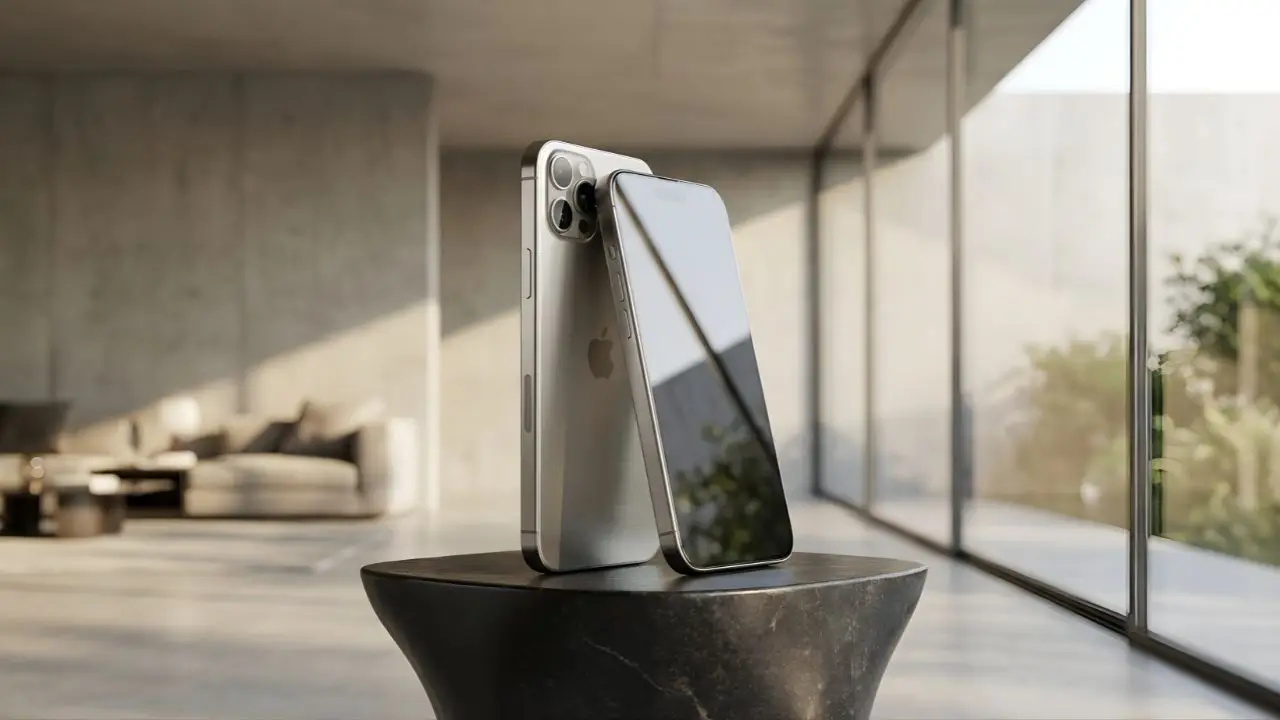
In hand, the iPhone Air is a genuinely shocking physical experience the first time you hold it. The titanium frame has the same premium tactile quality as the Pro models (exactly, because it’s the same material), but the thinness makes it feel like something from a near-future sci-fi film — like a prototype that shouldn’t exist yet. The four colors — Space Black, Cloud White, Light Gold, and Sky Blue — are all excellent. Sky Blue in particular is one of the better iPhone color options Apple’s offered in years.
The 6.5-inch ProMotion display is a genuine highlight. This is the first non-Pro iPhone to carry the 120Hz LTPO adaptive display — which means smooth scrolling and the battery-saving benefit of the display dropping to 1Hz when static content is on screen. At 3,000 nits peak outdoor brightness, it’s fully legible in direct sunlight. The Dynamic Island sits at the top, same as the Pro models. It looks and feels like a flagship display, because it is one.
Performance — The A19 Pro With an Asterisk
The A19 Pro chip in the iPhone Air is the same generation as the one in the iPhone 17 Pro, but there’s a catch: the Air uses a 5-core GPU variant rather than the Pro’s 6-core version, and critically — there’s no vapor chamber cooling system. The phone is 5.64mm thick. There’s simply no room for it.
What does that mean in practice? For everyday tasks — messaging, social media, web browsing, streaming, Apple Intelligence features — the Air is fast and fluid. You’ll never feel slow. Where it starts to trail is during extended, heat-generating workloads: long gaming sessions, prolonged 4K video recording, or sustained heavy multitasking. After several minutes of intense use, the chip thermal-throttles more aggressively than the Pro models, and reviewers have noted the performance in those situations is “closer to the regular A19 in the iPhone 17 than the A19 Pro it nominally carries.” (That’s a real quote from the GSMArena team who tested it extensively.) For most people’s daily use, this never comes up. For serious mobile gamers or video editors, it matters.
The 12 GB of RAM is genuinely useful — app state is preserved longer, and Apple Intelligence features run smoothly on-device.
The Camera — Good, But You’ll Know What’s Missing
The 48 MP main camera on the iPhone Air is the same hardware as the standard iPhone 17’s main lens — sharp, fast-focusing, excellent in daylight, solid in low light. Portraits and everyday snapshots look great. 4K@60fps Dolby Vision video is available and genuinely good. The 18 MP Center Stage front camera is one of the best selfie cameras Apple’s ever put in a non-Pro model — it’s the same 18 MP square sensor as the Pro models, and the image quality is excellent for video calls and content creation.
Here’s the honest part: there’s no ultra-wide. There’s no telephoto beyond a 2× crop. That’s it — one lens for everything. Are you someone who regularly uses the 0.5× ultra-wide? Because losing it will bother you within two days of switching to the Air. I’d push back on anyone who says the single-camera limitation is easy to dismiss — for the kind of travel photography, group shots in tight spaces, or wide landscapes that many iPhone users actually take, this is a daily constraint, not an occasional one.
Battery Life — Better Than You’d Expect, Not as Good as Competitors
The 3,149 mAh battery is the smallest in the 2025 iPhone lineup. Apple quotes 27 hours of video playback, which trails the iPhone 17 (30 hours), iPhone 17 Pro (33 hours), and iPhone 17 Pro Max (39 hours). The A19 Pro chip’s efficiency helps close the gap, but in real-world heavy use — navigation, camera, social media, video — many users report needing a top-up by late evening on demanding days.
The thing nobody tells you is that the battery anxiety is often worse than the reality. Multiple long-term reviewers — including AppleInsider and AppleVis — report comfortably finishing most days with 30–40% remaining on moderate use, which is fine for the average person. The concern is specifically heavy-use days and travel days, where you genuinely might run low. A MagSafe battery pack in your bag solves this entirely, which is worth factoring into the total cost.
Charging tops out at 20W wired. And the USB-C port runs at USB 2.0 speeds — 480 Mb/s — not the USB 3 speeds on the Pro models. That means transferring large video files to a Mac is slow. It also means no wired video output. For a $999 phone, that’s a real limitation that several reviewers have flagged plainly.
The Single Speaker Problem
There’s only one speaker — in the earpiece — because there’s no room for a bottom-firing driver in a 5.64mm chassis. Stereo audio through the Air’s speakers doesn’t exist. When watching video without headphones, everything sounds like it’s coming from one corner of the phone. Multiple long-term users have called this out as the day-to-day compromise they notice most — more so than the battery or even the missing camera. It’s a genuine audio downgrade from every other iPhone in the 2025 lineup. If you use AirPods or wired headphones for most audio, you’ll rarely notice. If you regularly share video clips or watch media through the phone’s speakers, you’ll notice it every time.
iPhone Air vs. iPhone 17 Pro — The $100 Question
This is the real decision for most serious iPhone buyers. The iPhone 17 Pro costs $1,099 — just $100 more than the Air at $999. For that $100, you get: a triple 48 MP camera system with 4× optical zoom and 8× optical-quality zoom, vapor chamber cooling for sustained peak performance, a bottom-firing stereo speaker setup, USB 3 speeds through the USB-C port, a slightly smaller 6.3-inch screen, and 33 hours of battery life instead of 27.
What you give up: the Air’s extraordinary thinness, the lighter weight (165g vs. 206g), and titanium versus titanium (both use titanium frames — this isn’t a design downgrade on the Pro, they’re genuinely similar here). The Pro is heavier and thicker. The Air is lighter and thinner. Both have the A19 Pro chip, both have 12 GB RAM, both have the 18 MP front camera.
Honestly, unless the design and feel of the Air is specifically what you’re buying it for, the 17 Pro is the better value at $100 more. The camera gap alone justifies it for most people.
Should You Buy the iPhone Air?
Yes, Buy It If…
- The form factor is genuinely the reason you’re interested — you want the lightest, thinnest premium iPhone that exists and you’re willing to trade camera versatility and battery density for it. That’s a completely legitimate preference. Plenty of people make this choice and love it.
- You carry your phone constantly without a bag and weight is a real daily issue. 165 grams versus 206 grams (iPhone 17 Pro) makes a physical difference over a full day of handling.
- You almost always use headphones for audio — AirPods or wired — and the mono speaker won’t affect your daily life.
- Your photography is mainly portraits, everyday snapshots, and video, not wide landscape or zoom work. The single 48 MP main camera handles all of that well.
- You’re upgrading from an iPhone 13 or older. The A19 Pro chip, ProMotion 120Hz display, Dynamic Island, MagSafe, 5G, and titanium frame will feel like a complete generational transformation.
Skip It If…
- You’re deciding between the Air and the iPhone 17 Pro. Pay the extra $100 and get the Pro — you get meaningfully better cameras, better battery, stereo sound, and USB 3. The Pro is the better overall phone for most people who need both form and function.
- You shoot ultra-wide photography regularly. The missing lens will frustrate you within a week and it won’t go away.
- You game seriously on your phone. The thermal constraints on the Air’s chassis mean prolonged performance doesn’t match the Pro models — and that gap is noticeable in demanding titles.
- You transfer large video files between your phone and computer. USB 2.0 speeds make that process genuinely slow.
- You’re an iPhone 15 or 16 user. The design is exceptional, but it doesn’t compensate for what you’d be losing in camera capability compared to a 15 Pro or 16 Pro Max.
The final word: the iPhone Air is a genuine feat of engineering. Apple built something that isn’t supposed to exist — a flagship-performance phone barely thicker than a pencil, with a titanium frame, a 6.5-inch ProMotion display, and a battery that actually gets most people through the day. It also has real compromises: one camera, one speaker, USB 2.0, a smaller battery. It’s not the phone for everyone. For the person who puts physical design above everything else and can live with those trade-offs consciously, it’s extraordinary. For everyone else — the 17 Pro is a better phone for $100 more.
I want to hear your take on this one — does the iPhone Air’s design appeal outweigh the compromises for you, or does the $100 gap to the 17 Pro make the decision easy? And if you’ve actually handled one in person, did that “oh, this is different” moment hit you the way it hit that woman at the Apple Store? Drop it in the comments.