My younger brother has been using an iPhone 11 for the past four years. Not because he can’t afford to upgrade — because every time he looked at iPhone prices he’d shake his head and say “I’m not spending a thousand dollars on a phone.” Then the iPhone 17e came out in March 2026 at $599, and he called me the same afternoon asking if it was actually worth it. I told him yes. He ordered one that evening. Three weeks later he texted me a single message: “Why didn’t I do this sooner.”
That reaction — from someone who actively resisted upgrading for years — tells you a lot about what the iPhone 17e is and who it’s for.
Let’s get into it properly.
Release Date and Announcement
Announced: March 2, 2026.
Pre-orders opened: March 4, 2026.
In stores: March 11, 2026 — in over 70 countries including the US, UK, India, and Japan.
Apple announced the 17e through a press release rather than a big event, which is in line with how they’ve handled the “e” lineup since it replaced the SE series. No keynote, no ticker-tape drama — just “here’s the phone, here’s the price, pre-orders now.” If you blinked you might have missed the announcement, which is a shame because the spec jump over the iPhone 16e (released in February 2025) is actually significant.
Full Specs at a Glance
| Specification | Details |
|---|---|
| Announced | March 2, 2026 |
| Released | March 11, 2026 |
| Display | 6.1-inch Super Retina XDR OLED, 60Hz, 2532×1170 resolution at 460 ppi, 1200 nits peak HDR brightness, True Tone, Wide Colour (P3), Ceramic Shield 2 front glass |
| Notch Design | Traditional wide TrueDepth notch (no Dynamic Island) |
| Chipset | Apple A19 (3nm) — 6-core CPU (2 performance + 4 efficiency), 4-core GPU, 16-core Neural Engine |
| RAM | 8 GB |
| Storage Options | 256 GB / 512 GB (no microSD slot) |
| Rear Camera | 48 MP Fusion, f/1.6, 26mm, sensor-shift OIS, dual-pixel PDAF — 2× optical-quality zoom via sensor crop; 4K@60fps, Dolby Vision |
| No Ultra-Wide or Telephoto | Single rear camera only |
| Front Camera | 12 MP TrueDepth, f/2.2, autofocus — Face ID, 4K video |
| Video | 4K@60fps (main), Cinematic mode, Dolby Vision, Action mode; no ProRes |
| Battery | ~4,005 mAh — up to 26 hours video playback |
| Charging | Wired USB-C fast charge (20W+, 50% in ~30 min); MagSafe wireless 15W; Qi2 compatible |
| Build | Aluminum frame, Ceramic Shield 2 front (3× better scratch resistance), glass back, IP68 water and dust resistance |
| Biometrics | Face ID (TrueDepth system in notch) |
| Cellular Modem | Apple C1X — up to 2× faster 5G than the C1 modem in the iPhone 16e |
| Connectivity | 5G, Wi-Fi 6E, Bluetooth 5.3, NFC, USB-C, eSIM |
| Operating System | iOS 26.3 (ships with it) |
| Dimensions | 146.7 × 71.5 × 7.8 mm |
| Weight | 169 g (5.96 oz) |
| Colors | Black, White, Soft Pink |
| Special Buttons | Action Button (customizable) — no Camera Control button |
| Launch Price (256 GB) | $599 |
| Launch Price (512 GB) | $799 |
| Current Price (May 2026) | $599 — available at Apple, Best Buy, Amazon, and all major US carriers; carrier trade-in deals often bring effective price to $0–$200 |
Price — What You’re Actually Getting for $599
The iPhone 17e starts at $599 for 256 GB. That’s the same sticker price as the iPhone 16e, but with double the base storage — the 16e started at 128 GB. So effectively, Apple dropped the price of 256 GB storage by $100 compared to last year. The 512 GB model is $799. There’s no 128 GB option here, which is the right call — 128 GB was already tight for most people in 2025.
Carrier deals at T-Mobile, Verizon, and AT&T have pushed the effective out-of-pocket cost to zero for qualifying trade-ins — especially if you’re upgrading from an iPhone 12 or 13. Apple’s own trade-in gives back $100–$200 depending on your old phone’s condition. At $599 with no trade-in, this is the cheapest way to buy a brand-new iPhone with a current-generation chip in 2026. Nothing else in Apple’s lineup comes close at that price.
What the iPhone 17e Is Like to Use Day to Day
The A19 Chip — Actually a Big Deal Here
Here’s the thing that surprised me most about the 17e: Apple didn’t phone in the chip. The A19 — the same generation powering the standard iPhone 17 and the Pro models (though with one fewer GPU core here, running a 4-core rather than 5-core GPU) — is a genuine flagship-tier processor on a 3nm process. It’s fast. Seriously fast. Apps open immediately, multitasking doesn’t stutter, Apple Intelligence features run smoothly on-device, and even demanding games hold solid framerates.
In my experience, the chip is probably the strongest argument for buying the 17e over a used or older iPhone. A two-year-old iPhone 14 is still a capable phone — but the A19’s Neural Engine, processing speed for AI tasks, and long-term software support window mean the 17e will stay relevant significantly longer. Apple’s track record suggests this phone will receive major iOS updates through at least 2031. That’s five years of support from a $599 phone. For my brother upgrading from an iPhone 11, the speed jump felt like switching from a bicycle to a car.
The Camera — Good, With One Clear Limitation
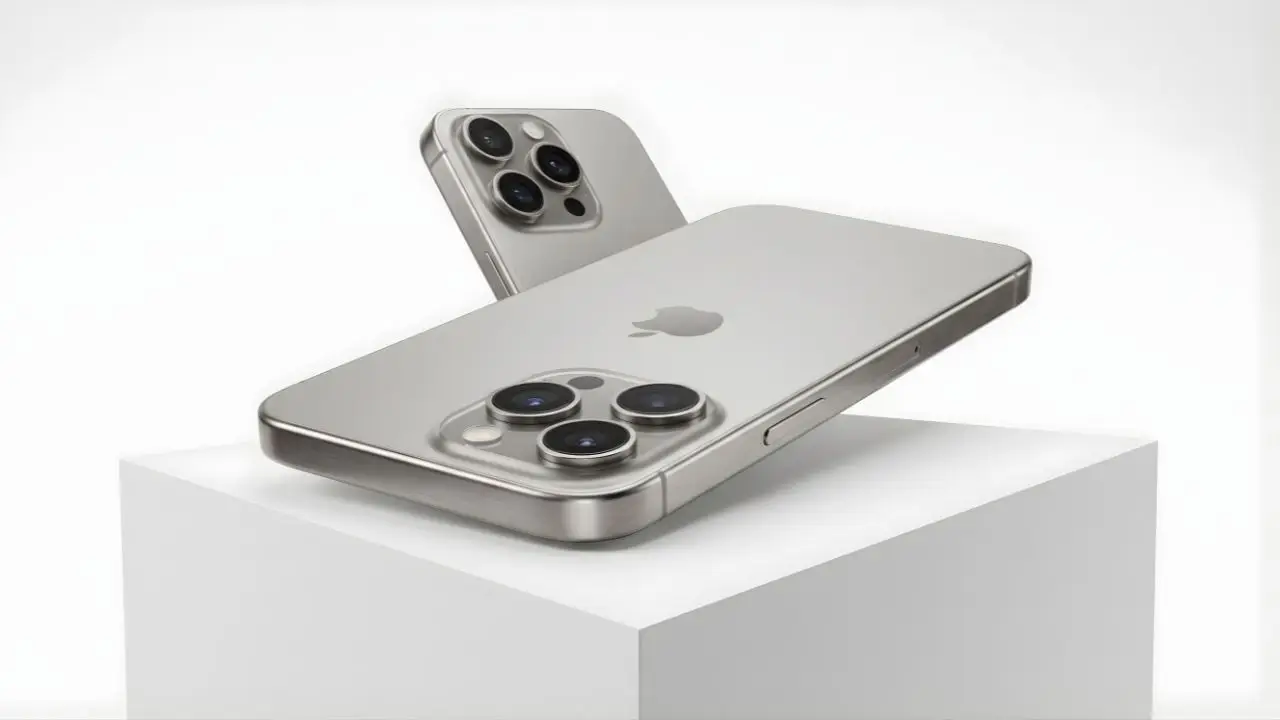
The 17e has a single 48 MP rear camera. Main wide lens, f/1.6, 26mm, optical image stabilization, dual-pixel autofocus. No ultra-wide. No telephoto. Just one lens, and it’s a good one.
Daylight photos are sharp and well-exposed — the 48 MP sensor captures fine detail that the 12 MP camera on the iPhone 16e simply couldn’t match, and you can shoot in 24 MP by default or crank to full 48 MP for extra crop room. The 2× optical-quality zoom via sensor crop is practical for everyday portraits and mid-range subjects. Low-light performance is solid, though it trails the iPhone 17’s dual-camera system in demanding conditions. 4K@60fps Dolby Vision video is genuinely excellent for a phone at this price — my brother shot a birthday video in a dimly lit restaurant and the footage held up better than he expected.
The missing ultra-wide is the real gap. If you shoot a lot of wide landscape photos, group shots in tight spaces, or architectural photography, you’ll feel that absence regularly. The iPhone 17 at $799 has a 48 MP ultra-wide. Whether that $200 gap is worth it depends entirely on how often you’d use it — which is worth being honest with yourself about before you buy.
Do you actually shoot ultra-wide photos regularly, or are you telling yourself you do? If the answer is “mostly portraits, food, and everyday snapshots,” the 17e’s single camera is absolutely fine.
The Display — The Honest Conversation
The 6.1-inch OLED is sharp, color-accurate, and gets bright enough for comfortable outdoor use at 1200 nits peak HDR. The Ceramic Shield 2 on the front — three times more scratch-resistant than the previous generation — is a genuine improvement for daily durability.
Here’s the honest part: it’s 60Hz. Every other iPhone in the 2026 lineup runs at 120Hz ProMotion. The 17e does not. If you’ve been using a 120Hz phone, the difference when scrolling through social media or swiping between apps is immediately noticeable — the 17e feels less fluid by comparison. If you’re upgrading from an iPhone 11, 12, or 13 (which were also 60Hz), you won’t feel a deficit at all because you’ve never had the smoother experience to compare against. This is genuinely the biggest factor to weigh before buying, and it’s one I’d push back on reviewers who gloss over it with “it’s fine.” For some people it’s completely fine. For people who’ve used 120Hz phones, it’s a visible step backward.
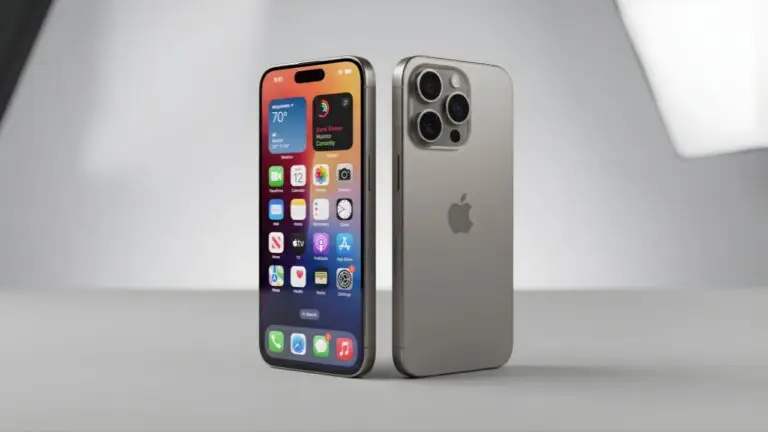
The wide TrueDepth notch is also clearly a 2021-era design element on a 2026 phone (Apple launched the Dynamic Island with the iPhone 14 Pro in 2022 and has used it on all Pro and standard models ever since). It doesn’t hurt the usability of the phone, but it does mark it visually as the “budget option” in the lineup — which is fair, because that’s what it is.
Battery Life — One of the Nicest Surprises
Up to 26 hours of video playback. That’s better than a lot of people expect from the 17e, and it’s genuinely noticeable in daily use. The 4,005 mAh battery is actually larger than the iPhone 17’s 3,600 mAh cell — a quirk of the single-camera, lower-resolution-display design leaving more room inside the chassis. The A19’s efficiency does the rest. Most users report comfortably getting through a full day of moderate use — social media, messaging, maps, some video — and arriving at bedtime with 30–40% remaining.
MagSafe is finally on the 17e. The iPhone 16e had only standard 7.5W Qi wireless charging, which was disappointing. The 17e supports 15W MagSafe — not as fast as the 25W on the Pro models, but finally a full MagSafe experience, meaning your existing MagSafe chargers, wallets, and mounts work properly with it. The thing nobody tells you is how much of a quality-of-life improvement it is to just snap your phone onto a charger at your desk and have it actually charge at a useful speed.
Build Quality and the Soft Pink Option
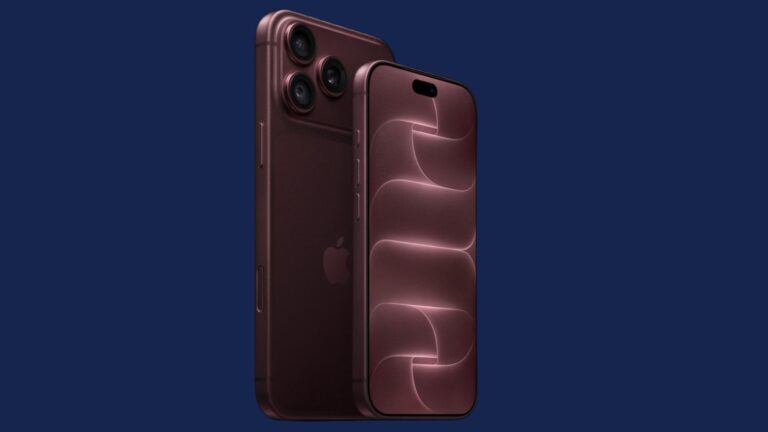
Compact, light at 169 grams, and genuinely premium-feeling for a $599 phone. The aluminum frame and Ceramic Shield 2 give it the same structural quality as the rest of the iPhone 17 lineup, and IP68 means a drop in the sink or a caught-in-the-rain moment isn’t a crisis. Apple added Soft Pink as a new color this year alongside Black and White, and (full disclosure) it looks great — especially paired with white MagSafe accessories. If pink isn’t your style, that’s fine, but the option has already proven popular among buyers who’ve wanted it on budget iPhones for years.
You get the Action Button on the left side — fully customizable, same as the more expensive models. What you don’t get is the Camera Control button that the 17 Pro introduced. That’s a minor miss.
iPhone 17e vs. iPhone 17 — Is the $200 Gap Worth It?
The iPhone 17 costs $799 and the 17e is $599. For $200 more on the iPhone 17 you get: a 120Hz ProMotion display, Dynamic Island instead of the notch, a 48 MP ultra-wide camera, Dual Capture video, the 18 MP Center Stage front camera, a slightly brighter display (3000 nits vs. 1200 nits peak), and the Camera Control button. Both have the A19 chip and 8 GB RAM. Both have 256 GB base storage.
That’s a real list of upgrades for $200. If you shoot a lot of photos, the ultra-wide alone might justify the jump. If you primarily use your phone for calls, social media, messaging, and streaming, the 17e covers everything you actually need and the $200 stays in your pocket.
Should You Buy the iPhone 17e?
Yes, Buy It If…
- You’re coming from an iPhone 12 or older — especially an iPhone 11 or SE. The A19 chip, 48 MP camera, MagSafe, OLED display, 5G with the faster C1X modem, and IP68 rating represent a generational leap. This phone will feel completely different.
- Budget genuinely matters to you. $599 is the cheapest brand-new iPhone with a current-generation chip you can buy right now. Nothing else Apple offers in 2026 comes close at this price.
- You want a compact iPhone that’s easy to use one-handed. At 146.7 × 71.5 mm and 169 grams, the 17e is the smallest and lightest current iPhone Apple sells — and one of the few phones in this size class that doesn’t sacrifice performance.
- You shoot single-subject photos, portraits, and video for everyday memories. The 48 MP main camera and 4K Dolby Vision video cover those use cases well without requiring more cameras.
- Long software support matters. The A19 chip puts the 17e in line for iOS updates well past 2031, which means this phone stays useful for five or more years.
Skip It If…
- You’ve already used a 120Hz phone and the drop to 60Hz will bother you. That friction is real and it doesn’t go away. The iPhone 17 at $799 has 120Hz.
- You shoot wide-angle or landscape photography. The missing ultra-wide is a genuine constraint that will frustrate you repeatedly if that’s how you shoot.
- You have an iPhone 15 or 16. The A19 chip upgrade and MagSafe are nice, but they don’t justify upgrading from a device that’s still running well on current iOS.
- You’re considering spending the $200 difference elsewhere — but actually won’t. If you’re genuinely going to use an ultra-wide lens and 120Hz display, spend the money. If you’re rationalizing a $200 saving you’ll barely notice across two years of phone payments, get what you actually want.
The honest verdict: the iPhone 17e is the best “affordable” iPhone Apple has ever made. It doesn’t pretend to be something it’s not — it’s clearly positioned below the standard iPhone 17, and Apple made deliberate compromises (60Hz, single camera, old notch design) to get there. But within those constraints, it’s fast, well-built, longer-lasting, and better value than any previous e-series iPhone. For someone upgrading from a three-year-old or older phone who doesn’t need every camera and display feature, it’s a genuinely easy recommendation at $599.
What’s your take — does the 60Hz display at $599 feel like a fair trade-off, or is that a dealbreaker that sends you to the iPhone 17 at $799? And if you’re upgrading from an older iPhone, how long have you been holding out? Drop a comment — I’m genuinely curious what people are deciding at this price point.